Leveling Up
I’m not much of a video gamer.
I think I hit my peak with Mario Kart when my kids were little, and I managed to win a race once every dozen or so tries. I was seriously hindered by my tendency to physically lean my body in the direction I wanted my little vehicle to go and distracted by the hysterical laughter that behavior inspired in my fellow racers.
Because of my relative ignorance, I had to ask one of the aforementioned chucklers what the term is for when a gamer’s skill set gets boosted for one reason or another. He told me “Leveling Up” works.
Well, there’s been some upward leveling this week.
Exhibit A: The Regiment
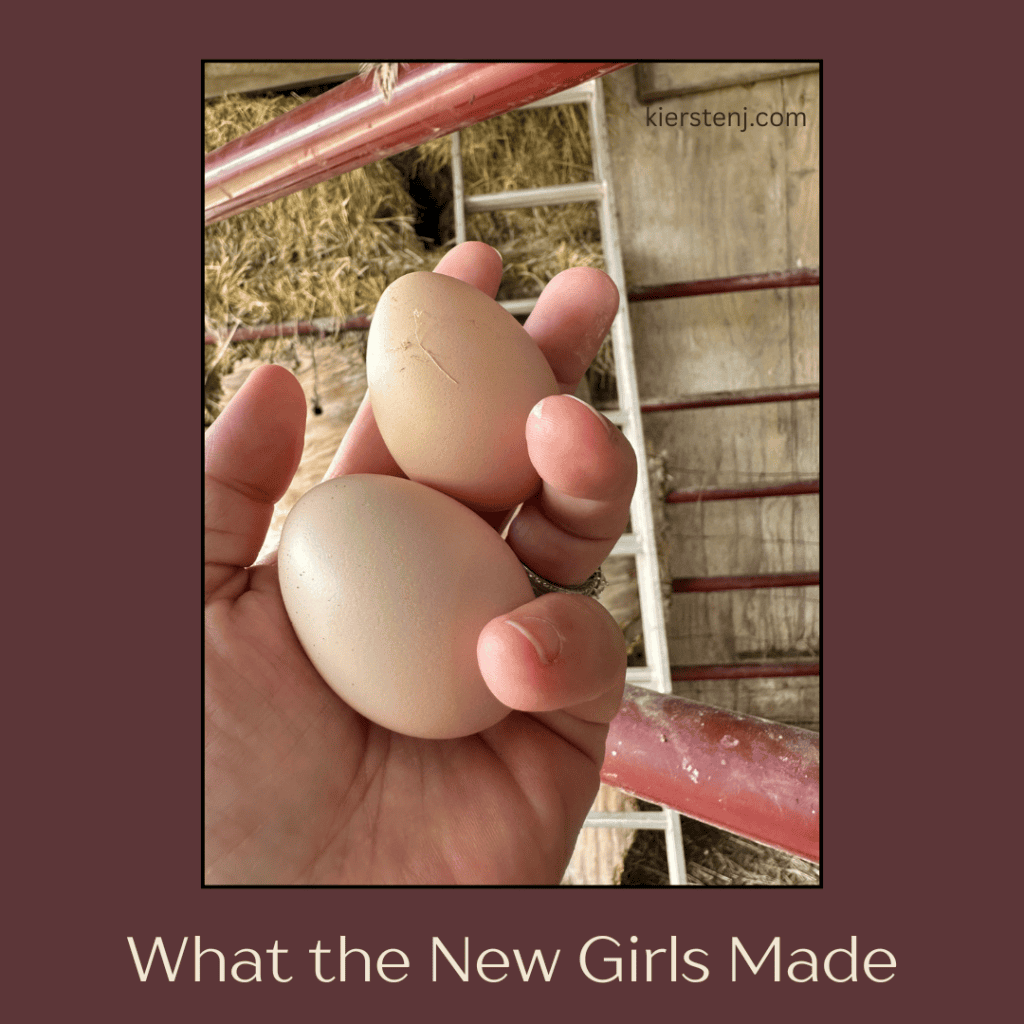
Two of our March 3rd pullets have started laying. They’ve graduated from full-time feed consumers to egg producers.
This is very exciting news that we did not discover by finding eggs in the nesting boxes in their chicken house.
I had noticed that two of these hens had developed very red combs and wattles. I had heard new and different clucky noises when I was refilling water containers in the middle of the recent hot summer days. I had been somewhat obsessively counting days and consulting Google about when this particular breed of chicken should start laying.
They were late.
Greg had leveled up his Easter Egg hunting skills a little earlier, a few weeks after the older hens started free ranging during the day. We’d noticed a drop in production and he put his talents to work and discovered a trove in the barn.
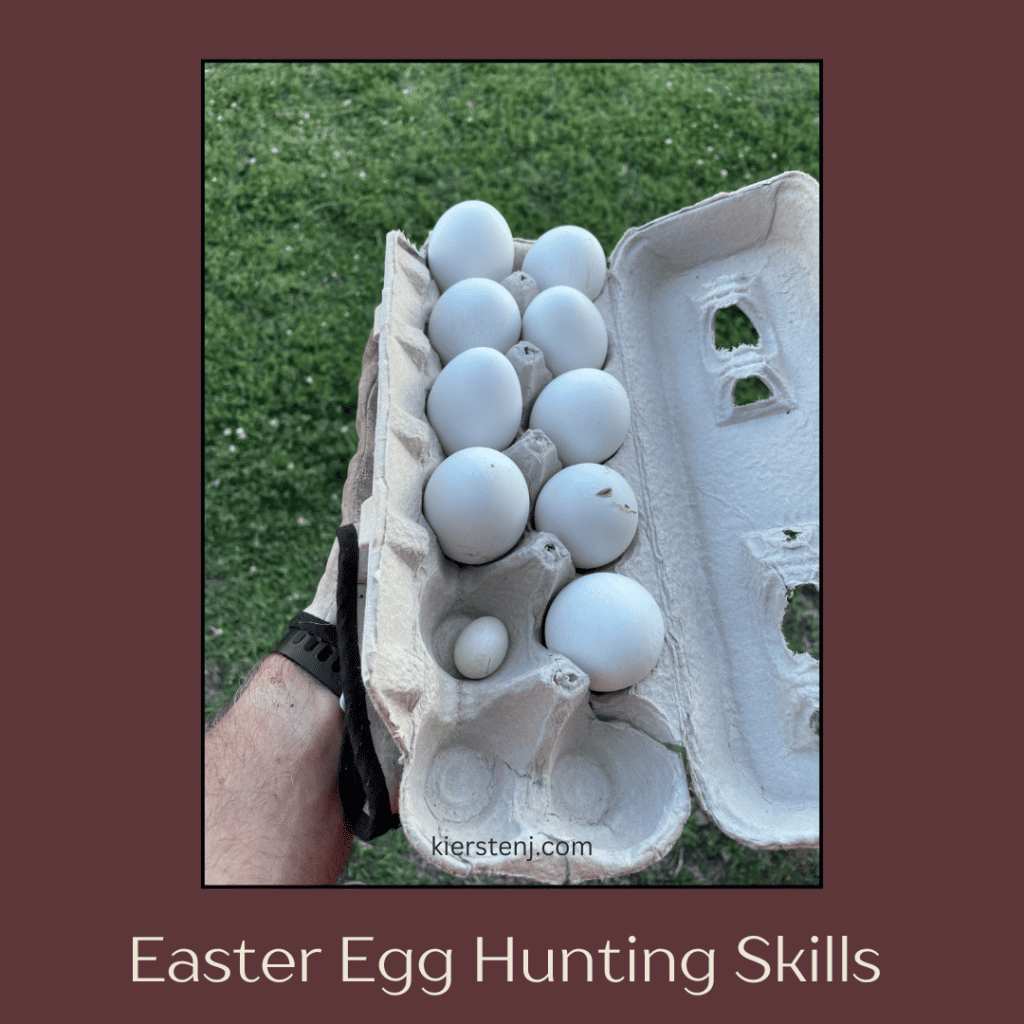
These beauties were hidden in a bucket with some hay in the back of the barn.
But even Greg’s increased skills could not find any eggs from the new girls.
Then Greg’s mother, the Resident Chicken Expert, spotted the missing clue.
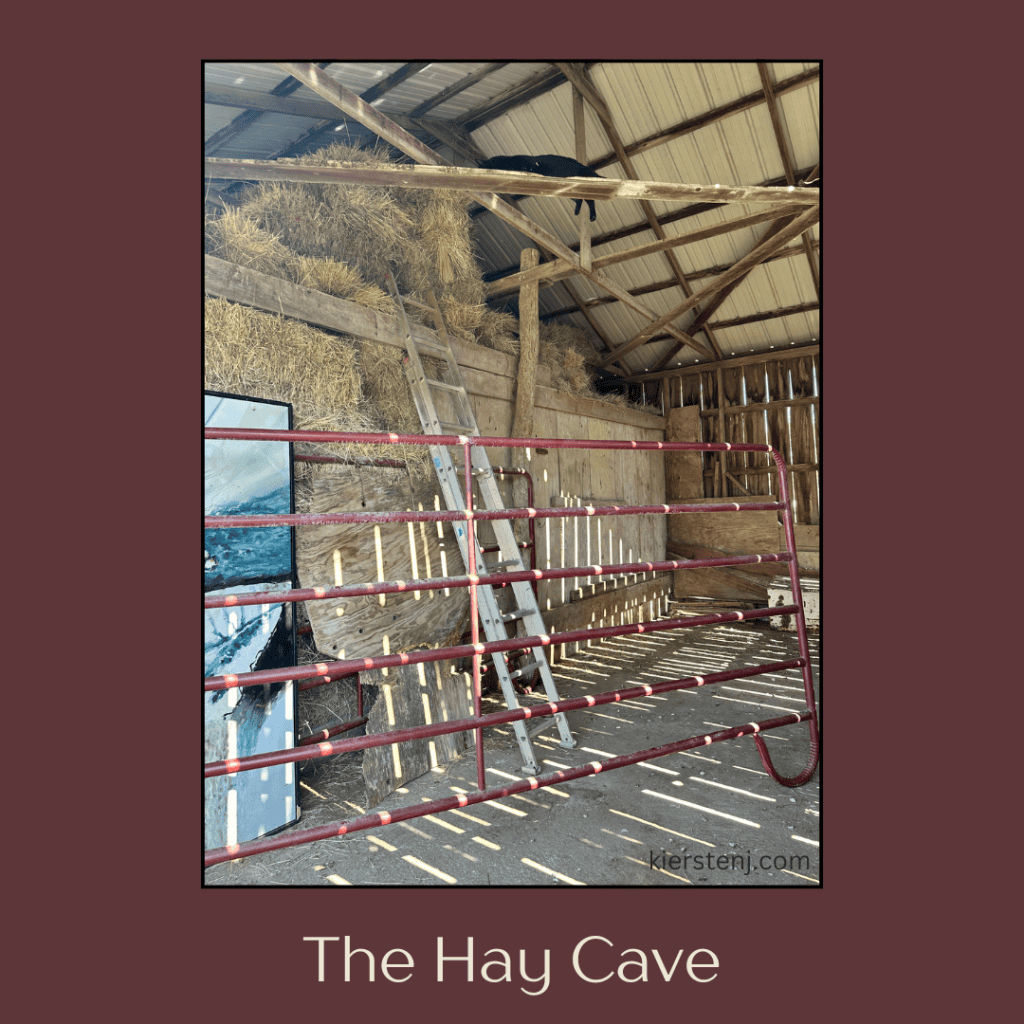
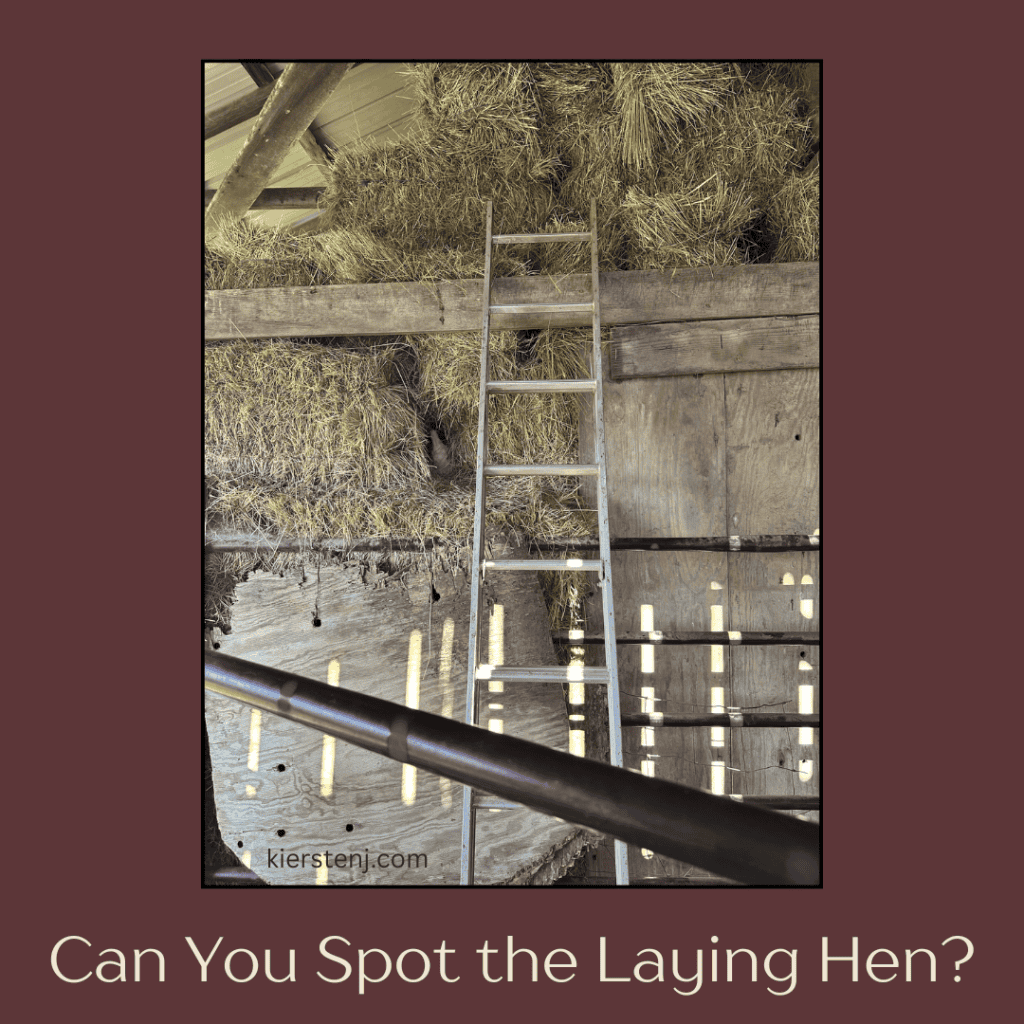
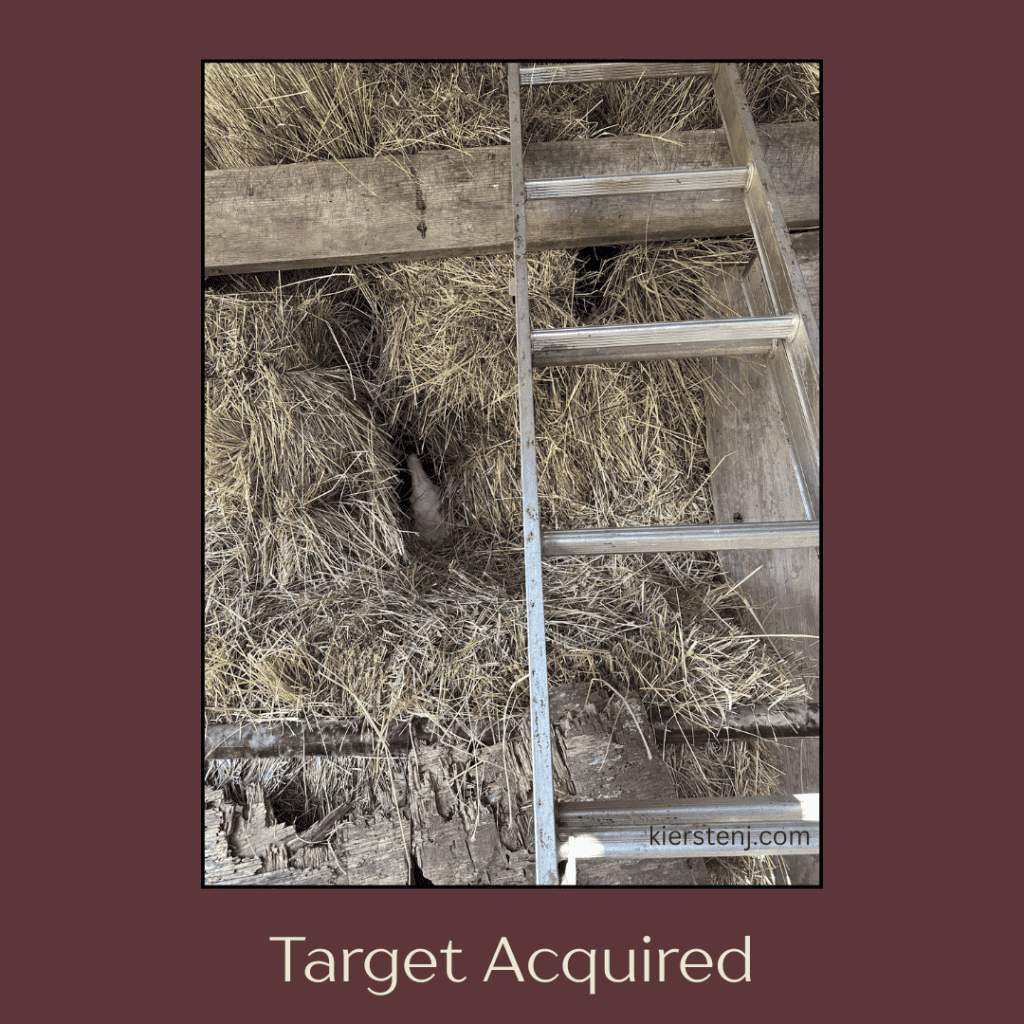
Yup. This is what she saw. Way up there, singing the “I’M DOING AN IMPORTANT CHICKEN THING” song, was one of our girls. Not only that, but the other girl was nearby, waiting her turn to do an important chicken thing.
BINGO.
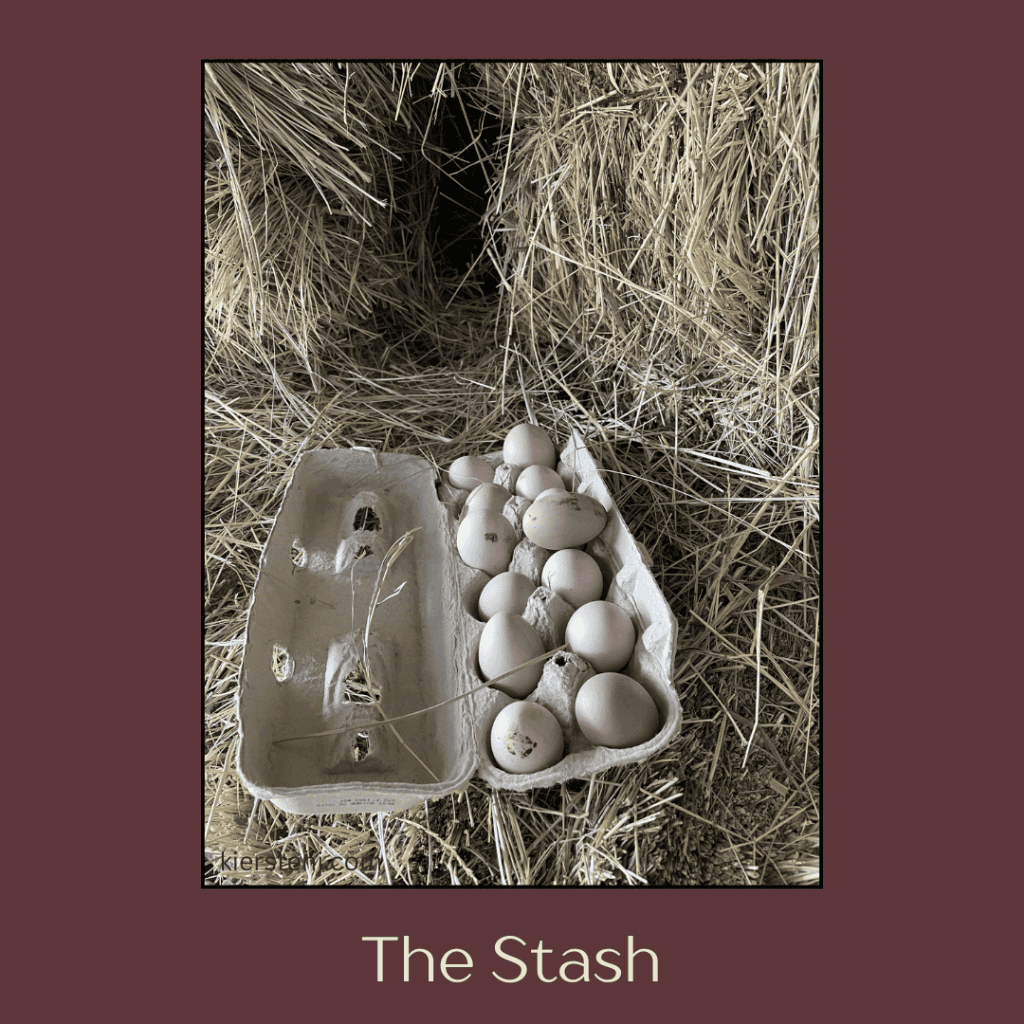
Never mind that these chickens have five lovely nesting boxes in their chicken house, three of which have been helpfully seeded with golf balls to prompt them into proper laying behavior. They chose the hay tower. And have continued to do so.
I have my eye on another chicken I expect to start laying any day now. Who knows where she’s going to decide to do her important chicken things.
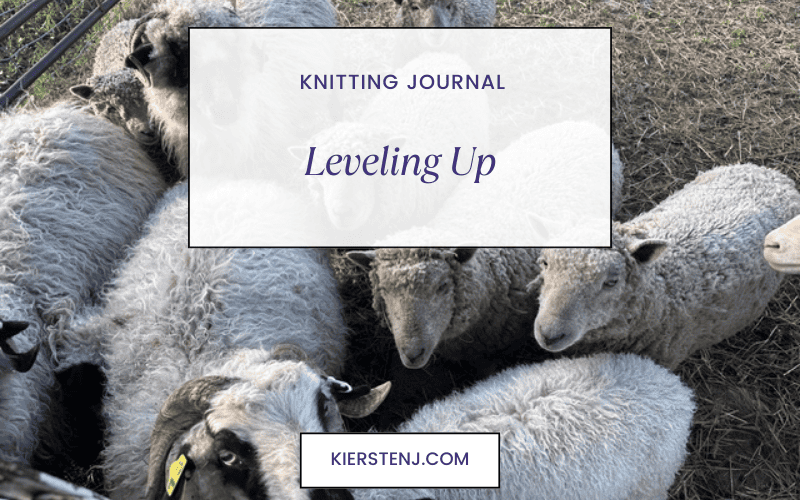
Exhibit B: The Valais lambs
This leveling up is not as fun as finding hidden egg troves.
Several days ago, while giving Fitz his customary scritches, I noticed that the skin under his jaw felt a little…thick. Weird, I thought, and went on my merry way.
The next day, I noticed it again, but the shape of it had shifted a bit, and it actually felt like it was a bit smaller in total size. Ok, I thought. Weird sheepness, I guess. I’ve never been close to a maturing male Valais cross ram. I actually wondered if it was some sort of fatty pad or something he was growing.
The next day, Eliza presented with what was clearly and obviously bottle jaw, and Fitz had deteriorated.
As a quick summary, bottle jaw is a secondary symptom of severe anemia caused by parasitic worm overload. Parasites are something every sheep carries to some degree, and parasite management is part of good shepherding. I had on my radar to take samples to our vet the next week to see if it was time for deworming, as I’m not very good yet at another visual exam (FAMACHA scoring) to look for anemia.
The blunt truth is that I waited too long to submit the samples and relied too little on FAMACHA. Eliza and Fitz were gravely ill.
With the helpful advice of vet friends, we treated Fitz and Eliza along with the rest of the flock.
And waited.
There’s no magic sheep pill for this.
The medicine we gave the sheep killed off the parasites, but their bodies need time to make more red blood cells. And we needed to wait and see if they had enough reserves to make it to the point where they can heal themselves.
So far, we are hopeful. As a dear friend reminded me, every day with four feet still on the ground is a blessing even if there’s no other improvement. I’m thankful for every glimpse of their unique personalities. Yesterday, Fitz hollered at me when supper didn’t come quickly enough, and I about laughed in relief.
But our little friends have a long road of recovery in front of them as they build back their blood supply.
Their shepherd is reminded of how much more she has to learn to care for them well. I know I’ll never look at those daily chin scritches quite the same way.
Greg’s Got Questions
Thank you to those of you who participated in the last poll!
The winning question was: How much of Harriet’s behavior do you attribute to her unique personality and how much is because she’s a Merino?
I love that this is the question for this week.
The simple answer is that I think Harriet is a fascinating mix of neurotic Merino ewe and her own funny individual self.
Her mother, Emma, and Aunt Lizzy are crazy. There’s just no getting around it. They’re easily spooked, they have strict “no touching” policies, and Lizzy has a serious issue with Babydolls. I don’t know what a Babydoll did to her in some former chapter of her life, but she is not over it.
Harriet has a touch of that, in that she prefers to maintain a rather large bubble of space about her at all times and might snap at any moment and plow a Babydoll lamb into next Tuesday for no apparent reason.
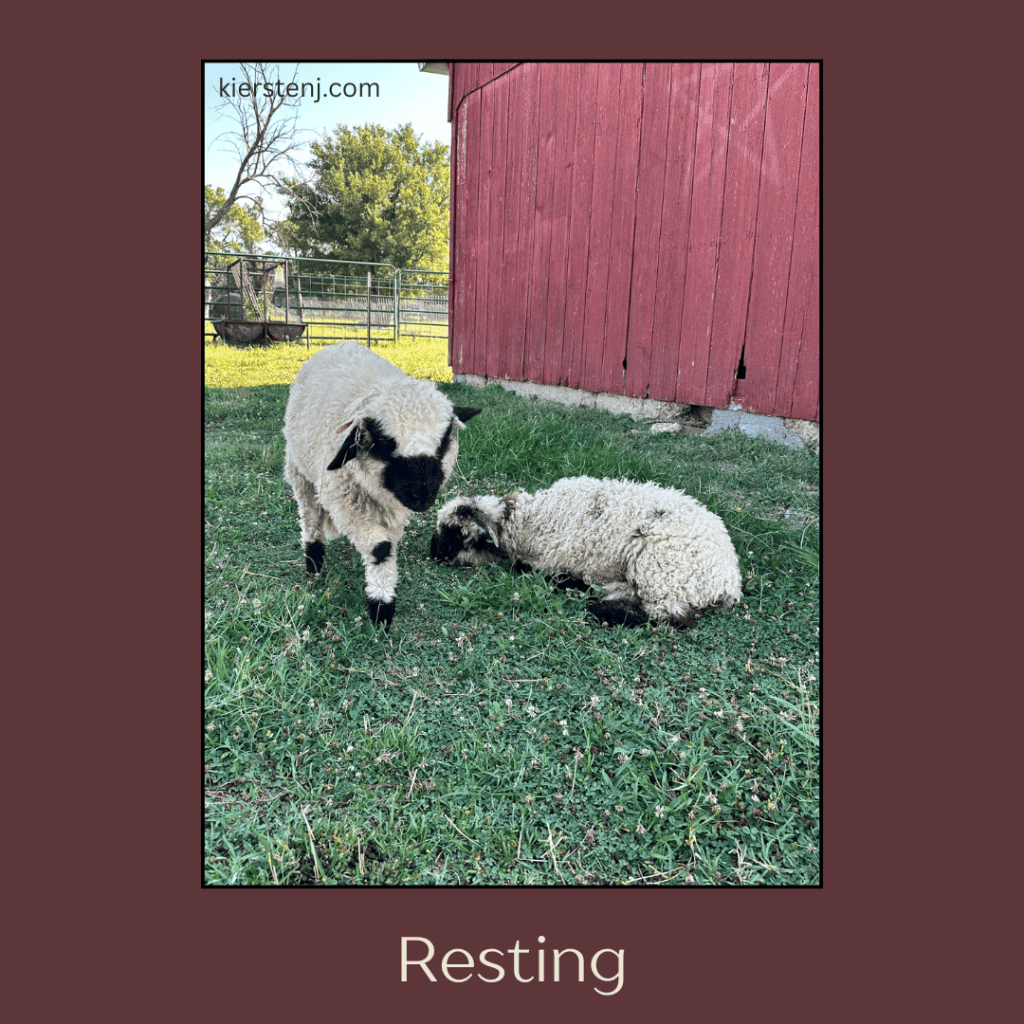
Harriet often presents as a cranky older sister who would really prefer to be left to her solitary occupations (I can say that because I relate, girlfriend). And yet, when our anemic Fitz has run out of gas and sought out a companion to rest beside, it is Harriet he most often chooses.
The first couple times I saw this, I silently begged Harriet not to freak and yeet the poor guy to the moon while he was feeling so poorly. She didn’t.
Apparently, this fellow cranky older sister doesn’t mind having company under certain circumstances.
Perhaps she’s a softie, after all.
Greg’s Questions for Next Week
(As a matter of procedure, the poll function takes you to another page to submit your vote, so if that happens to you, you’re on the right track!)
Question 1: What ‘s the deal with the golf balls in the nesting boxes? How does that work?
Question 2: What exactly is FAMACHA scoring? Does it have anything to do with that green stuff I was eating when I was in Singapore?
Question 3: Does a sheep’s body work the same as a human body to make red blood cells?
Happy knitting,
Kiersten J