Story Problem
They start off simply when we’re young. If Sally has 3 apples and Herman has 4 apples, how many apples do they have all together?
As we progress, the scenarios get more complex. We add people and variables and operations, and before you know it, we’ve got multiple trains leaving stations at different times heading different directions at varying speeds and we are instructed to calculate arrival times, distances traveled, and engineers’ first names.
As we were working out how to divide the pasture into segments and use fixed lengths of existing fencing and calculating perimeters and corridors, it hit me. We are living in Story Problem Land.
If you have four paddocks and each one needs to rest for 45-60 days to let parasites die and forage to regrow, how long may the sheep graze in each paddock? What if Paddock 1 is 25% larger than the other three paddocks? How should the timing goals change?
What is the probability of moving 18 sheep from the barn to the far north of the enclosure with no enclosed lane to keep them from wandering off to graze on whatever catches their fancy? (This one’s a freebie. The answer is zilch.)
Which arrangement of existing perimeter fence plus portable electric fencing plus other existing materials allows us to create a lane to the farthest north section of the pasture without purchasing more expensive fencing?
I abjectly apologize to all my past Math teachers for every word and thought I ever uttered or entertained that sounded anything like “Why do I have to do all these story problems? I will never do any of this in real life!”
You were right. I was wrong. Mea culpa.
After several days of my “broad strokes” brain saying, “this should work,” and Greg’s engineer brain calculating, “this might work,” and several sweaty days of, “we are GOING to make this work,” we have established the all-important Step One in our rotational grazing objective.
As regular readers may remember from last week, we found ourselves in a state of urgency to get the sheep onto clean pasture after evidence of parasite overload. Vague “this would be good to do sometime soon” plans became “we’ve got to make this happen ASAP” plans.
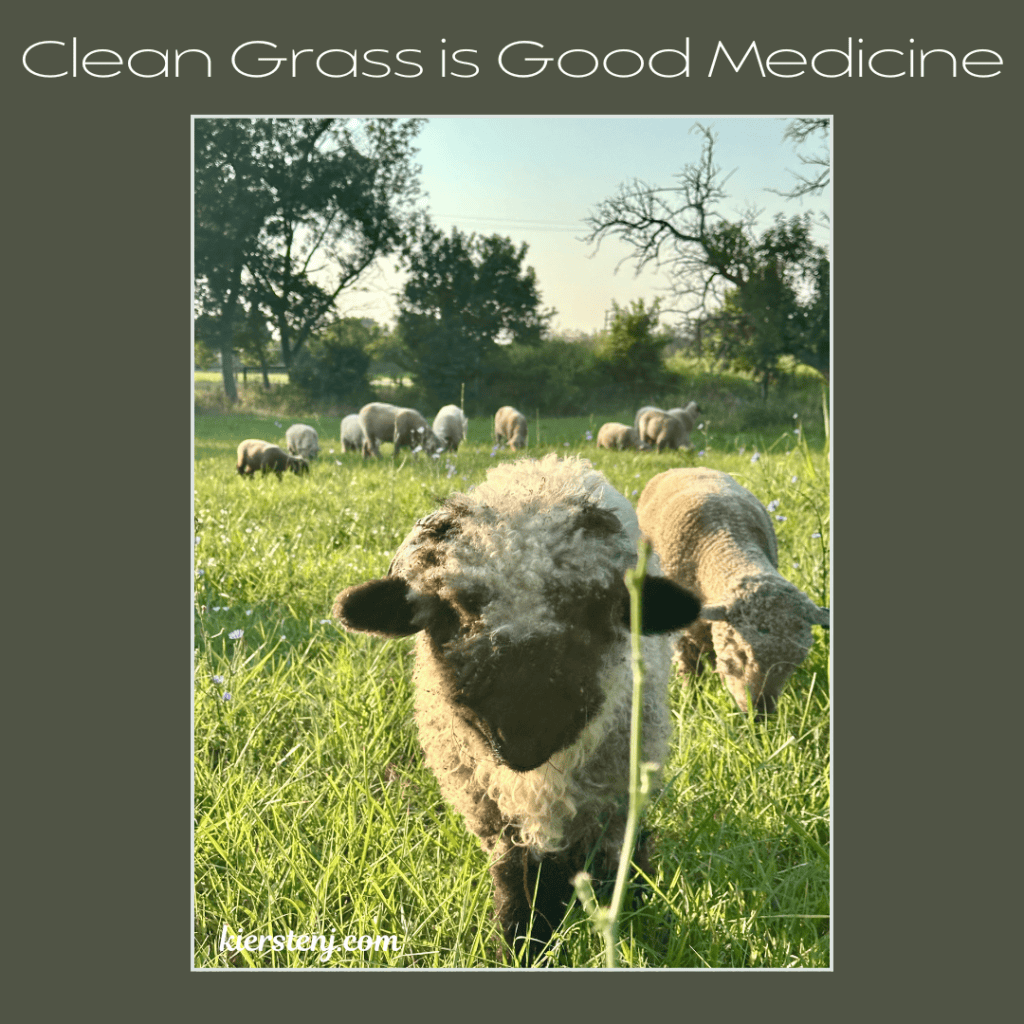
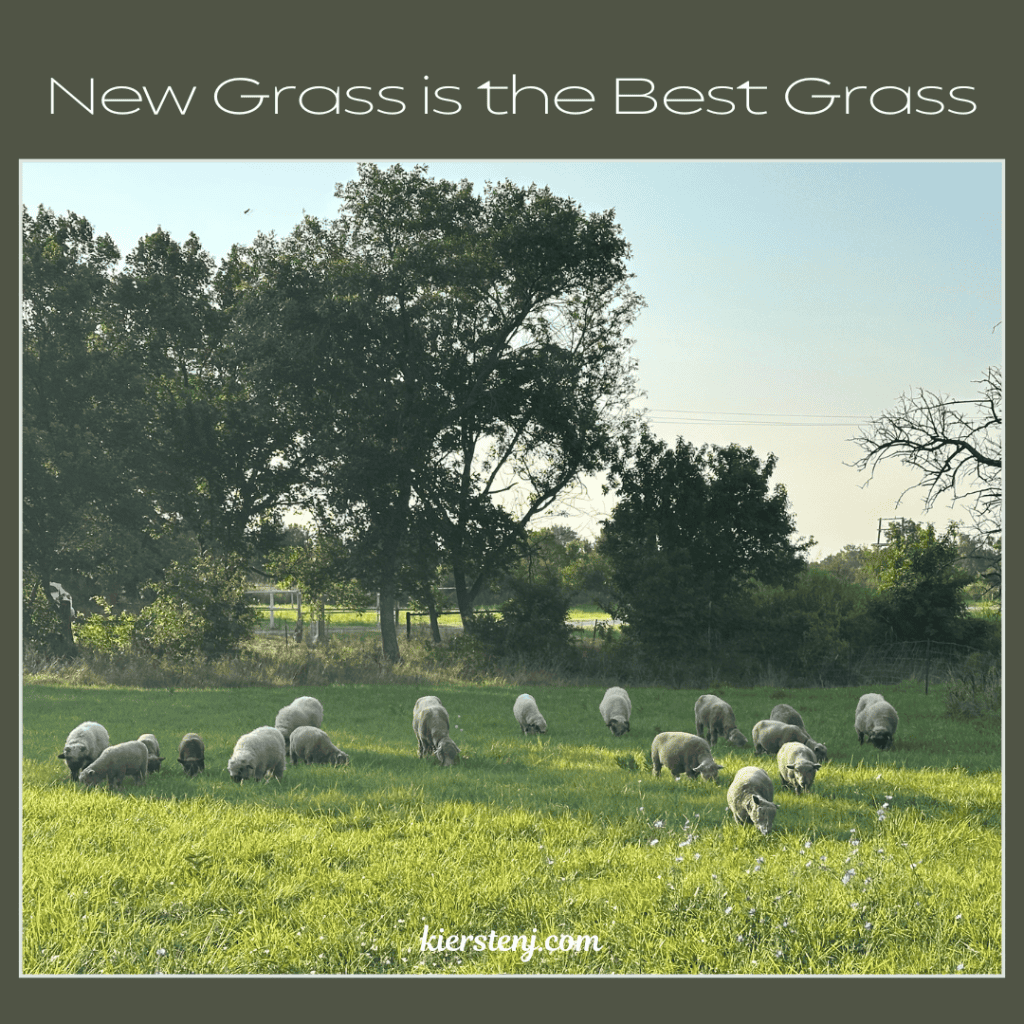
It’s happened. The sheep are on new pasture, and we are all adjusting to some new aspects of this arrangement.
The Commute
We live in an area with predators, and so we lock the sheep up at night. That means that each morning and evening, we have a little stroll with the sheep between the pasture and the barn. We put the portable electric fence parallel to the perimeter fence along one side of the pasture to create a lane to contain the sheep as they make their way from barn to pasture and back again.
I was so curious to see how the sheep would handle both the lane and the walk to the new pasture. What is the probability that 18 sheep will walk over 300 feet in one direction without coercion in under 3 hours?
The first morning, as I slowly walked ahead of the flock, Georgiana took the lead and followed. She looked like she had questions and concerns about the new arrangements, and why had she not been consulted?
The first walk home looked like this:
The humans didn’t quite have all their ducks in a row, did they?
We are all getting better at this. Last night the babydolls took the lead back to the barn and the entire flock raced down the lane ahead of us. This morning they all walked up to the pasture on their own. They knew exactly where to go and broke into a run when the lane opened up into the wide green space.
The Stick-Tights
There’s a real name for these. Something like bur ragweed. The important thing to know about them is that there are a whole bunch of a lot of them on the edges of this pasture, and they are at nose height for lambs. And they want to stay attached forever and ever, amen.
One sheep walks 100 feet. He collects stick-tights at a rate of 1 million stick-tights per yard. How many stick-tights will he accumulate?
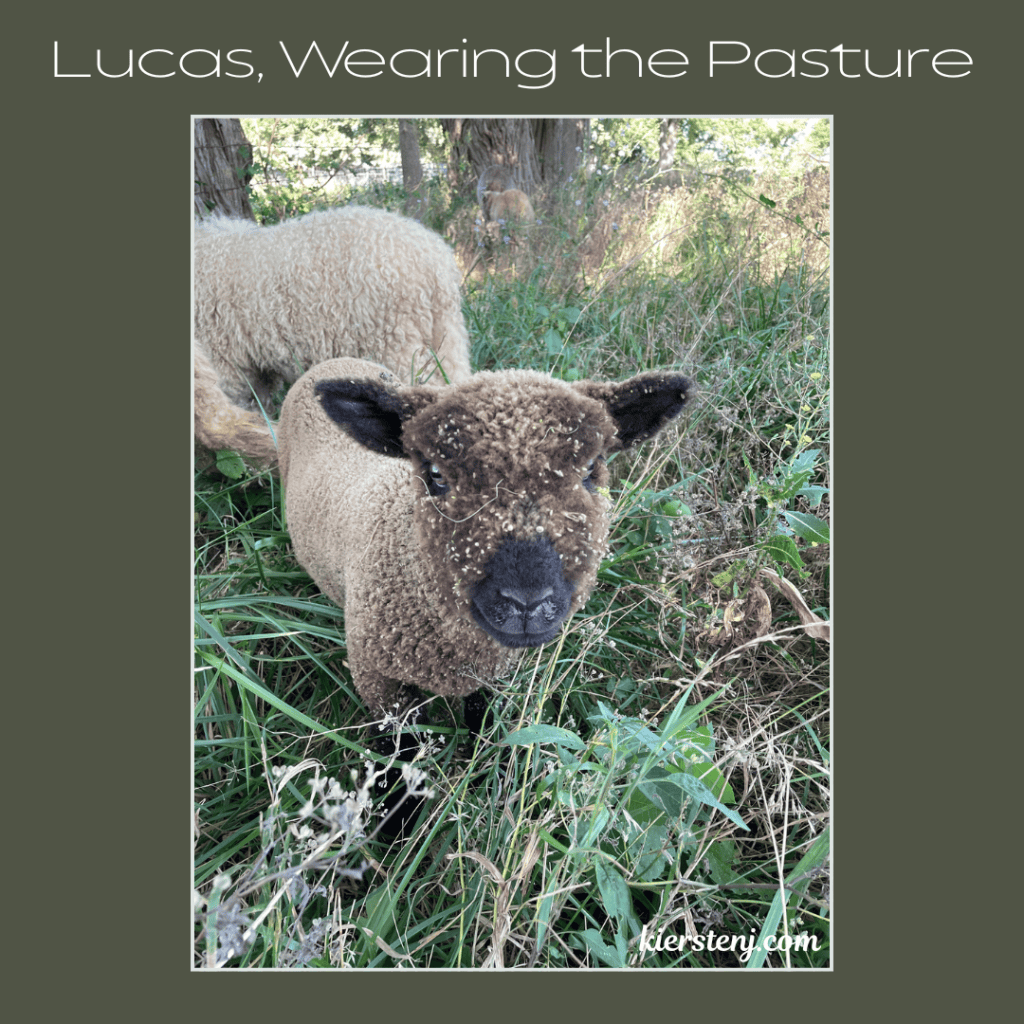
This is going to be an issue with the wool. This is not a problem for today. That’s what I’m telling myself right now, when the parasite issue is more important. I’ll deal with pernicious overly attached seeds later.
Environmental Controls
The Babydoll lambs have finished weaning, so we’ve combined the wee Hooligans flock with the larger ewe flock. Everyone except the rams is together again, and it’s been fascinating to watch moms and lambs reunite and renegotiate terms.
At night, though, we now have all 18 in one large stall. I don’t know how closely you all have been following Southeast Kansas weather lately, but it’s hot. Horrendously hot.
A nice benefit of having the sheep out on the pasture is that they have a nice large shady area and access to the breeze. Previously, they hid out in the barn when it got hot. It’s much cooler out under the trees, so their daytime conditions have improved. But at night, increasing occupancy isn’t the best way to lower temperatures.
We’re doing our best with box fans. Last night we moved them around to try and avoid having one “sweet spot” that would inspire competition.
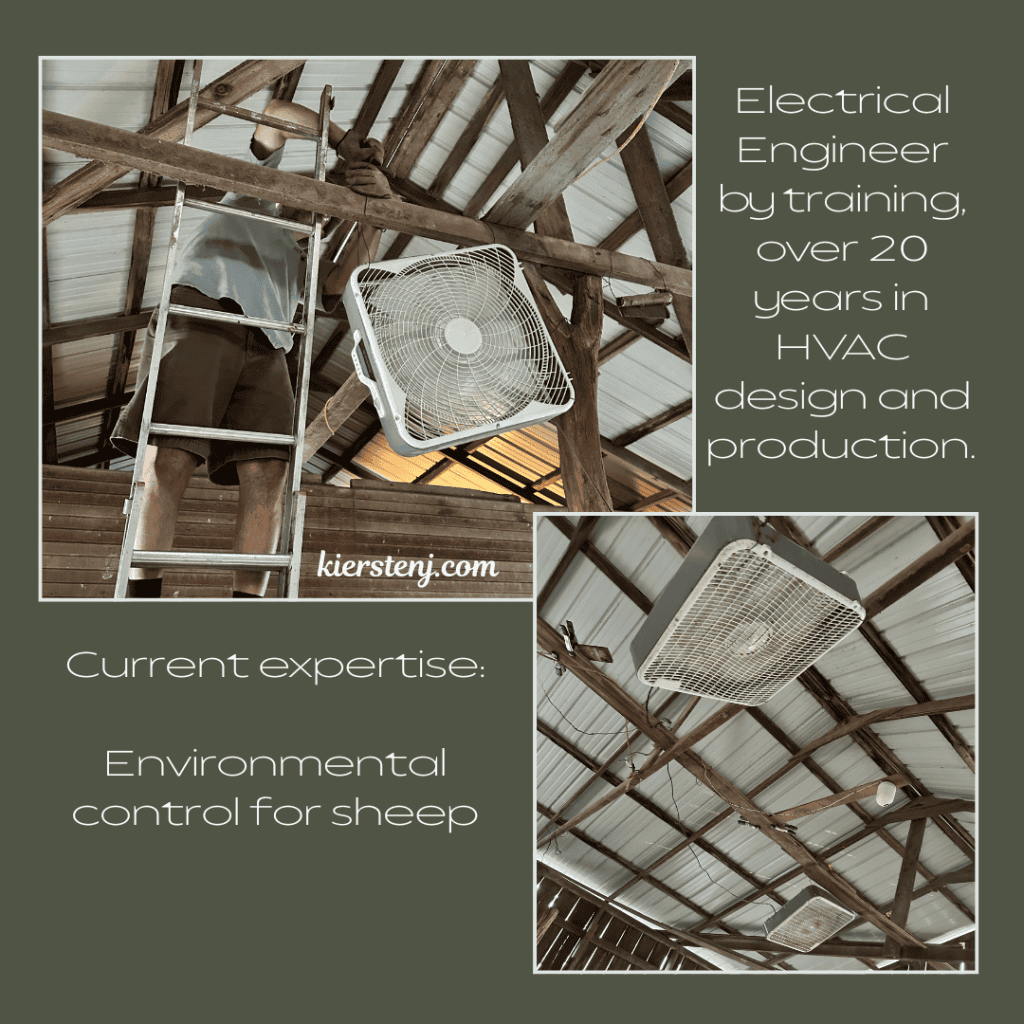
I’m sure there’s a Story Problem that involves air speed and temperature and evaporation and comfort levels. The truth is, I’d tapped out by that point. College Engineering Physics ate me up and spit me out at the front door of the Philosophy Department.
So, I’ll retire my calculator for the moment and practice loving what I’m seeing in front of me.
Greg’s Got Questions
Thank you to those of you who participated in the last poll!
We had a tie last week.
The first winning question was: Does a sheep’s body work the same as a human body to make red blood cells?
Yes. Humans and sheep both produce red blood cells the same way, through a process that occurs mainly in bone marrow.
The second winning question was: What‘s the deal with the golf balls in the nesting boxes? How does that work?
In theory, chickens that see a golf ball or two in the nesting boxes think “AHA! That’s where eggs go!” I’ve seen this advice all over the internet. People swear by it.
In practice, our chickens are laughing into their feathers.
We have five lovely, freshly prepared nesting boxes for the chickens who either have just started or soon will be starting to lay. Four of those ladies have started laying. We are 0 for 4 on nesting box usage. Nary a one has deigned to bestow a single egg in any one of those prime egg receptacles. Instead, we have the Hay Cave, the Scrap Wood Pile, and the Center of the Barn Floor, for the love of Foghorn Leghorn.
But it’s hard to be upset, because the discovery is pretty fun. And the latest two eggs have been awfully pretty.

Greg’s Questions for Next Week
(As a matter of procedure, the poll function takes you to another page to submit your vote, so if that happens to you, you’re on the right track!)
Question 1: Mea Culpa?
Question 2: About those stick-tights and your “This is going to be an issue with the wool.” comment. How big of an issue is that going to be exactly? Based on the condition of your fancy, flowery overhauls if we have to pick out all of those things before we send the wool to the mill to be processed, we’d better get busy. Do you think you can train The Regiment to peck up stick-tights from wool like they do bugs from the straw?
Question 3: How did the moms and lambs reunions compare to your expectations based on the research you’d done?
Happy knitting,
Kiersten J