Cleanout
There are people on this earth who love to clean. I don’t mean that they enjoy having a clean space in which to live and work. I mean they love the process of cleaning. Dusting, mopping, scrubbing, making things sparkle. I know some of these people. They are wonderful, sane, lovely human beings. I admire and respect them.
I will never fill out the application to join their beautiful club. I would not pass the first screening.
I hate cleaning. I also hate filth and clutter. This is a problem, likely for a series of visits with a therapist, but the point for today is that this past week has involved some serious cleaning and clearing of one sort or another.
The House
Closing day for the old house is this coming week. (Yay!)
Thanks to a very successful garage sale and the amazing Marketplace genius of a neighbor, we are not going to have to hire anyone to move our belongings from the old house to the new. (Repeat: Yay!)
The flip side is that we are the movers for the remaining little things that need to get out of the house before closing. We’ve been doing this load by load as we’ve gone into town; a little here, a little there. This last week we’ve stepped it up. A trailer has joined the party.
Advil is back on the Walmart pickup list.
The Barn
You might remember me mentioning a few times that we’re relatively new to this Ag stuff. We’re learning as we go, and there’s a lot to learn when you basically start with nothing more than a great fondness for sheep.
I learned early on that the “deep bedding” method is good for sheep in the barn. We had a dirt floor and covered it with a thick layer of straw. As the sheep did their business in the stall at night, a lot of it would fall through the straw, and we could just remove anything that obviously needed to be removed. Fresh straw was periodically added on top.
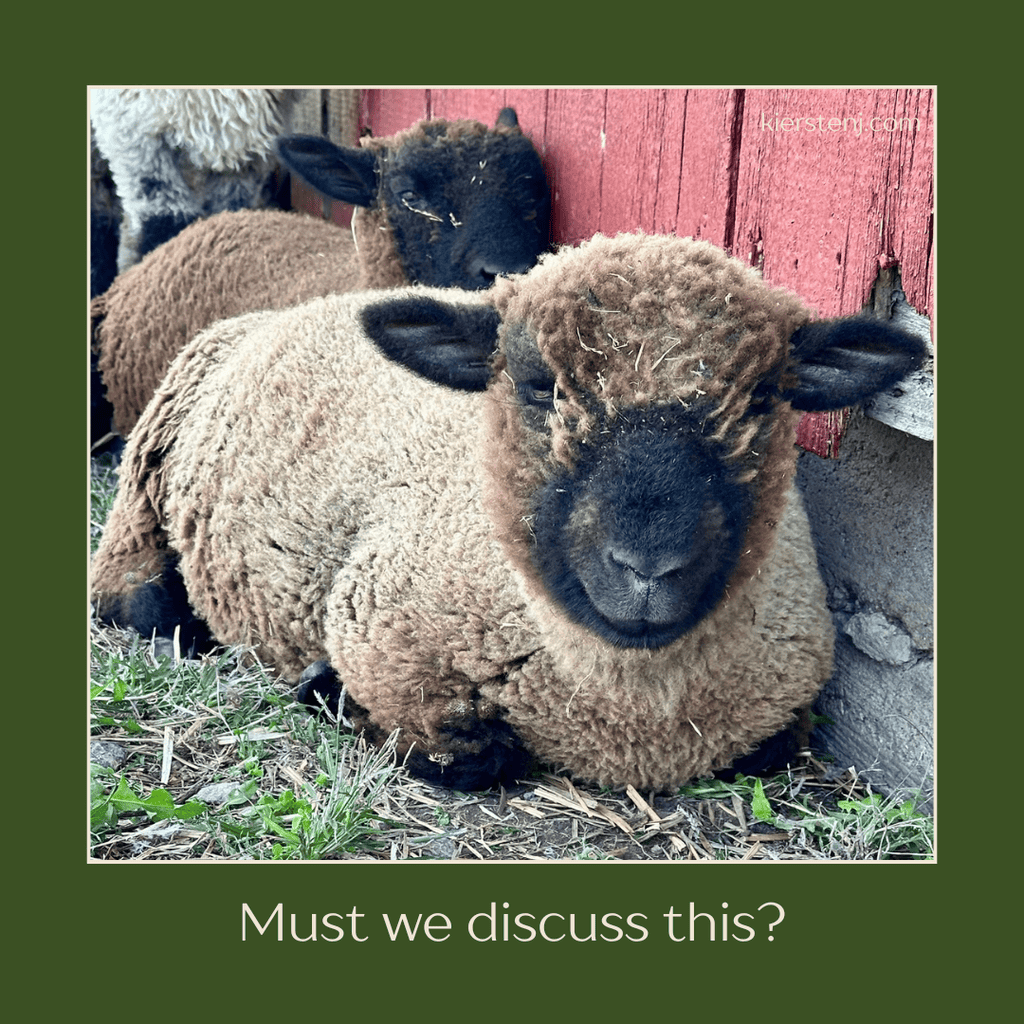
This is a great system in cold months, because the whole system actually creates compost on the lowest level. If you’ve ever made compost, you may remember that the process produces heat. So, the deep bedding method combines nighttime sheep comfort and warmth through the cold months.
My research did not clue me in on what happens when the weather warms up. There is not enough straw in the world to cover up what was developing under those layers. And baking in the record Kansas heat.
Mercy.
Well, it’s gone now. I feel like I’ve committed a heinous sin by reducing the act of removing that monstrosity (it almost felt sentient) to “it’s gone” because the effort Greg put into making that happen was nothing short of heroic.
We now have Compost Mountain over by the burn pile. It has another name as well, but we’re keeping that one to ourselves.
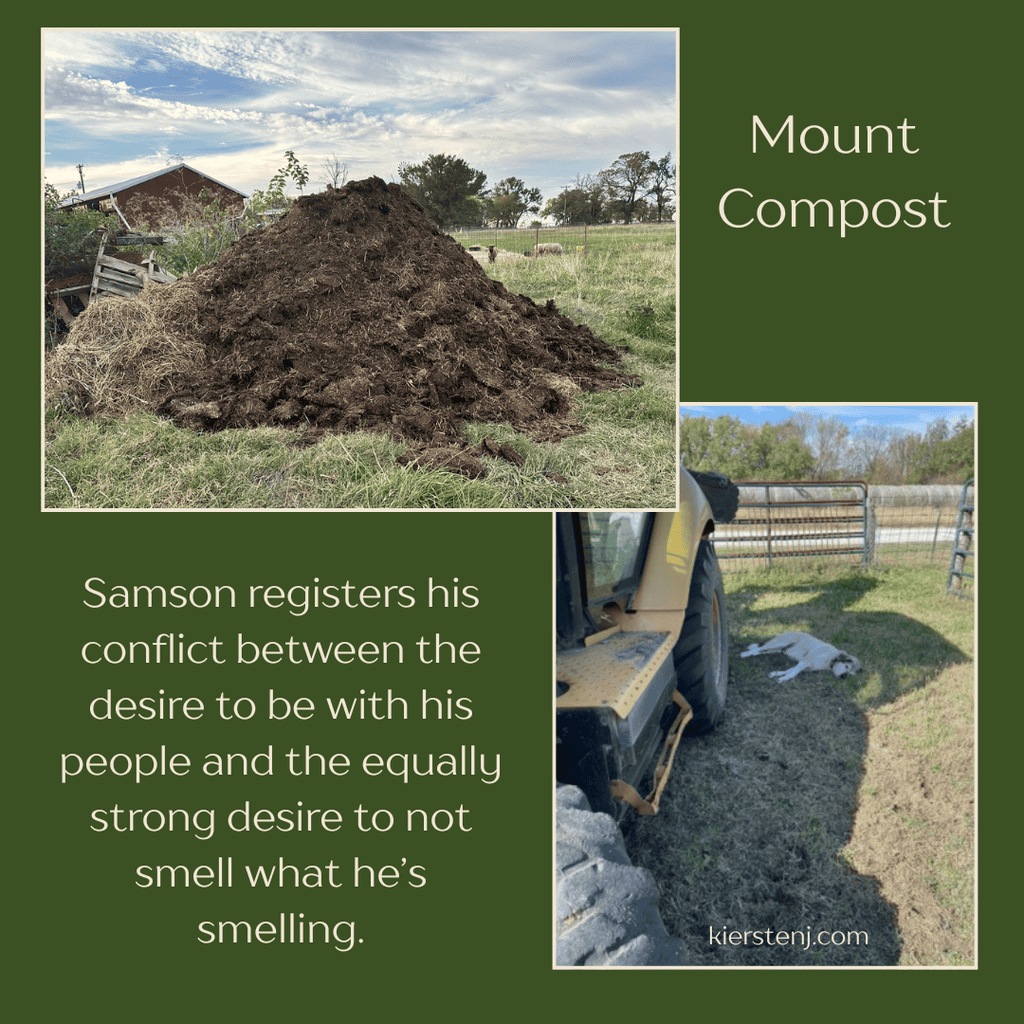
If you’re local and need some astoundingly good compost for your garden, talk to me. We’ve got it.
The Runoff Tank
Back in September, I saw a Facebook post about someone who put goldfish in one of their spring-fed livestock tanks. Their tanks were consistently covered in algae, and they thought they’d do an experiment to see if the goldfish would eat any of it. It worked amazingly well for them.
Well, that was enough for me to start thinking:
We have a huge concrete tank next to the barn that receives rainwater runoff from the barn roof.
It has a similar algae issue.
I like goldfish.
Feeder goldfish are really cheap.
The internet says this might actually work, even in winter, as long as the tank doesn’t freeze solid, and it does not.
Wouldn’t it be fun to see goldfish in the water tank?
Wouldn’t it be funny to see people surprised by goldfish in the water tank?
I WOULDN’T HAVE TO BUY FEED FOR THEM!
SOLD!
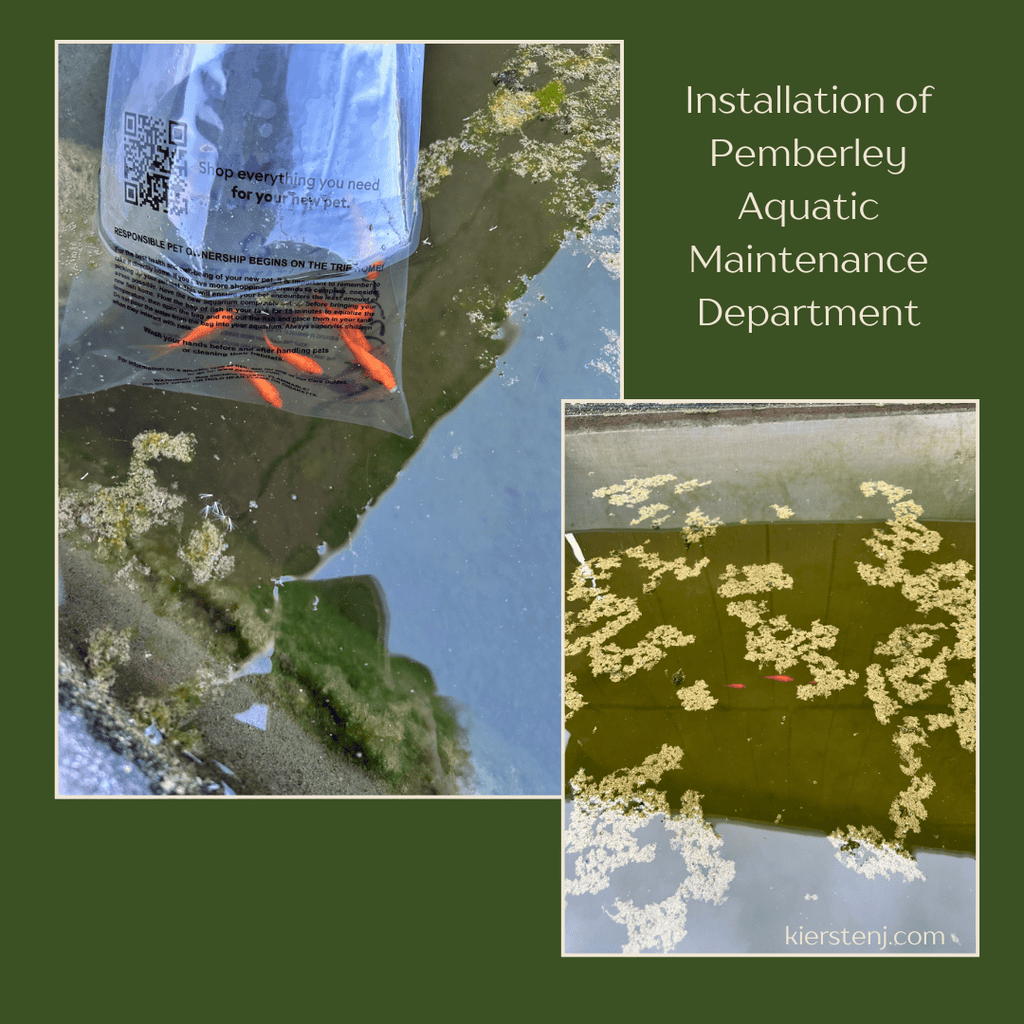
Seven weeks later, I can report that the surviving goldfish are bigger, delightful, and the most efficient cleaning crew on Pemberley Farm.
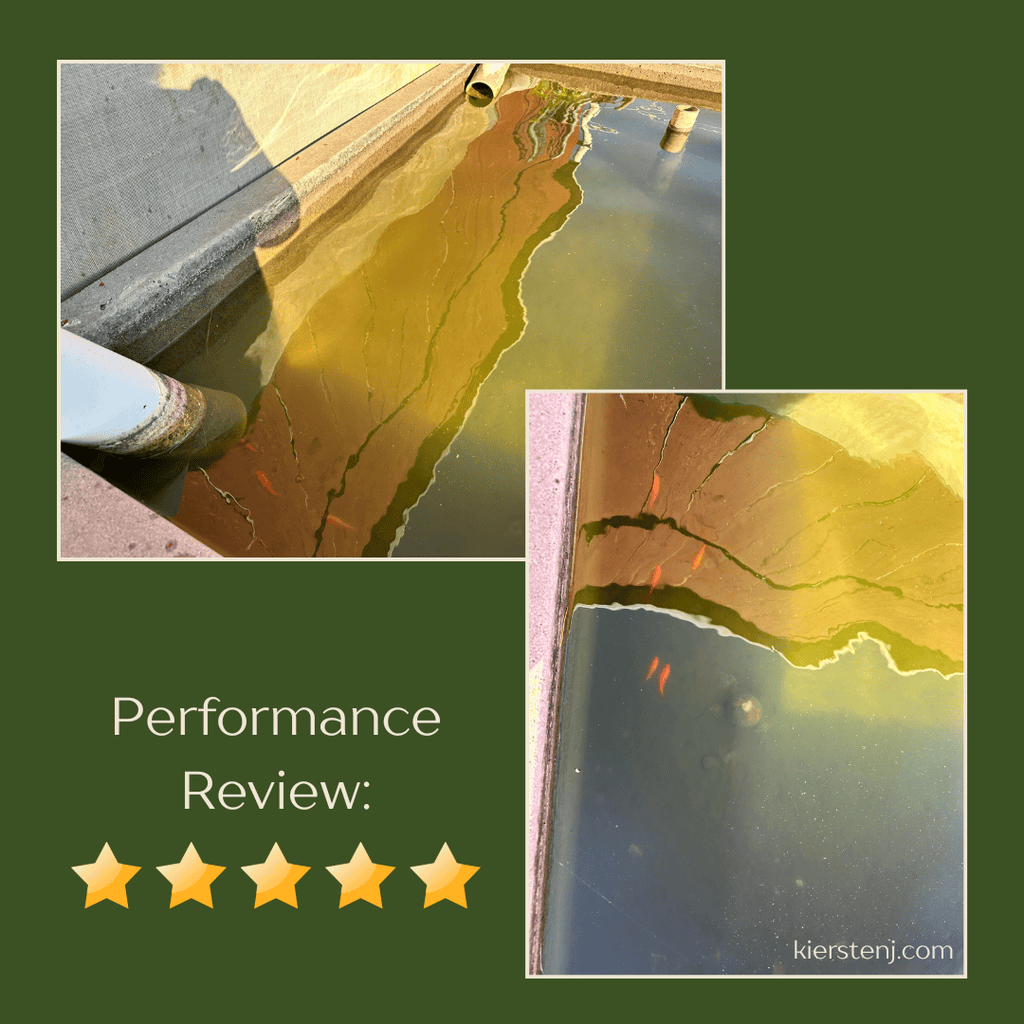
The reduction in algae is pretty amazing, but I think what’s even more fun is how I am compelled to pause almost every time I pass by the tank. The darting flashes of orange are simply ridiculous in the context of a ginormous concrete rainwater reservoir tank. They get especially excited when I come to fill the waterers for the little chicks, zipping near the surface as if checking for tasty morsels that might inadvertently have been DoorDashed from the chick barracks.
If only they could be deployed to the sheep stalls…
Greg’s Got Questions
I am woefully behind on answering questions, so there are two for this week!
What have you done to create the environment in which our sheep feel safe around you and how can we apply those techniques to better serve the people in our lives?
I fell into this a bit by accident, partly by nature and partly by ignorance. When the sheep arrived, I just wanted to watch them be sheep. I wanted to see what they did, how they interacted with each other and their new environment, and determine if there was anything we needed to adjust so they’d be more comfortable. I was fascinated by them and didn’t have firm opinions about many aspects of how they should or shouldn’t be. I still like just sitting near them, usually a bit removed from them so they can approach if they choose, but don’t feel forced into reacting.
I think approaching people with the same sort of curiosity and willingness to observe what they’re willing to share without pushing for interaction can be helpful in communicating safety. It can also get one labeled as shy, introverted, and reserved!
Have you ever had someone pay you more than a quarter for things using this technique? (He asks her knowingly…)
This is in reference to my “Everything not priced is a quarter” garage sale strategy, and yes! It happens often! It usually happens one of two ways. Either I get, “Keep the change! Really!” even when the change is sometimes well over a dollar. Or, I get, “I’m not giving you only $X for all this…Please take $Y.”
Twist my arm.
This Week’s Questions:
(As a matter of procedure, the poll function takes you to another page to submit your vote, so if that happens to you, you’re on the right track!)
Question 1: Is there anything even remotely equivalent to goldfish in the concrete tank for the sheep stall in the barn? Please tell me there’s a breed of chicken that has been created specifically for this task and that the cost of them is the same as those goldfish.
Question 2: What are we going to do differently to help us avoid creating another ginormous mountain of manure in a single, very long day one year from now? Please tell me it’s as simple as ordering the aforementioned chickens.
Question 3: What’s the difference between sheep manure and that produced by other animals like our chickens and the donkeys? Will we be mixing all of what’s being produced by our Pemberley Farm poop factories into Compost Mountain? How does all of this affect the compost that we’re creating?
Happy knitting,
Kiersten J