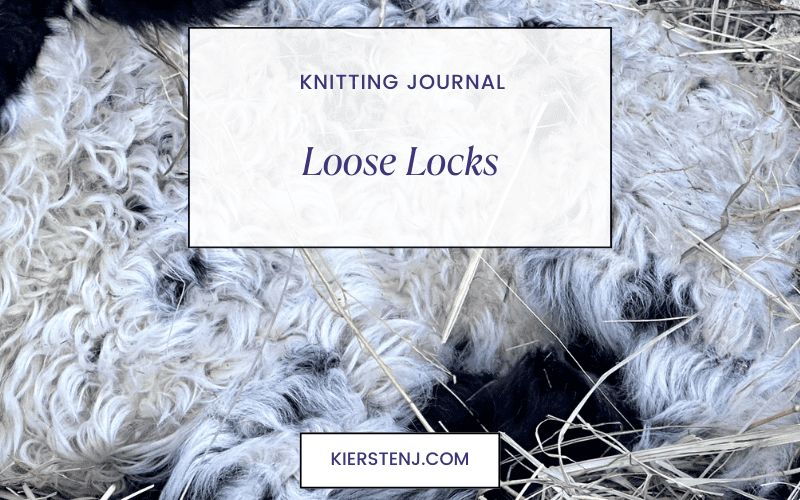
Loose Locks
Those of you who received Mr. Darcy the Sheep’s letter a couple of weeks ago may remember that we recently had our first shearing day at Pemberley Farm.
Shearing is fascinating to me.
When I first fantasized about owning sheep, it was primarily for the purpose of using their wool, so shearing was an obvious element of the equation. But there are so many other reasons to want sheep, and so sometimes, shearing is secondary, or even an afterthought.
I’ve seen more than one post in a shepherding group to the effect of: “Yikes, do we have to do something now that Buttercup resembles a frosted sphere?”
You can take some clippers, take a deep breath, mutter a prayer, and dive on in. Some do. More power to them.
We were fortunate enough to find a wonderful team who was capable of handling the extra wrinkly skin on our Merinos, which we learned can cause some shearing issues.
The whole process is mesmerizing, though, and if you’ve never had the opportunity to watch someone shear a sheep, let me recommend this person: Allan the Shearer. I don’t know anything about the guy except that he’s a total artist when it comes to shearing sheep. He shears all sorts of breeds, which is also cool to see, but what really gets me is that he does both electric and blade shearing. With old-fashioned clipping shears. The monster scissory things.
I could lose hours watching him and his team shearing sheep. See what you think.
Anyway, after our big shearing day, in addition to awkward looking but much more comfortable sheep, we have a whole bunch of wool. Yay!
I’m finally getting the opportunity to fill in the last few gaps in the Beast to Blanket arc by cleaning and combing the Merino wool from Mr. Knightley. It’s a learning experience for sure, and I’ll share more about that in another newsletter.
The Babydoll wool is a big question mark for me. I’m hoping I can clean and comb it, as well, but I won’t be able to really tell how well it will work until I get into the process.
And the Valais wool…
The problem is that these sheep produce a LOT of wool. And they have to be sheared at least twice a year, if not three times a year in hotter climates.
It’s not soft. It’s not great to spin. It’s got amazing visual texture. It’s good for felting.
What could we do with all this wool?
I have ideas. I’ve seen other folks make “humane sheepskin rugs” by felting the sheared ends of a fleece onto other felted wool to make a rug or throw. I like that idea for the Valais lambs’ fleece, especially Fitz’s, with all his black spots.
I’ve seen woven and felted rugs with this wool. Someone made an enormous carpet with twelve fleeces from her VBNs. Awesome. It would cover the entire floor of my house.
I’ve seen some amazing felted replicas of Valais Blacknose sheep made with their own wool. That sounds like something fun to try.
Then, in one of those, “huh, what if I tried…” mental wondering moments, I thought it might be worth experimenting to see if I could build an easy introduction to fiber arts activity with some of the wool.
This will surprise no one, but Georgiana insisted on being part of this experiment.
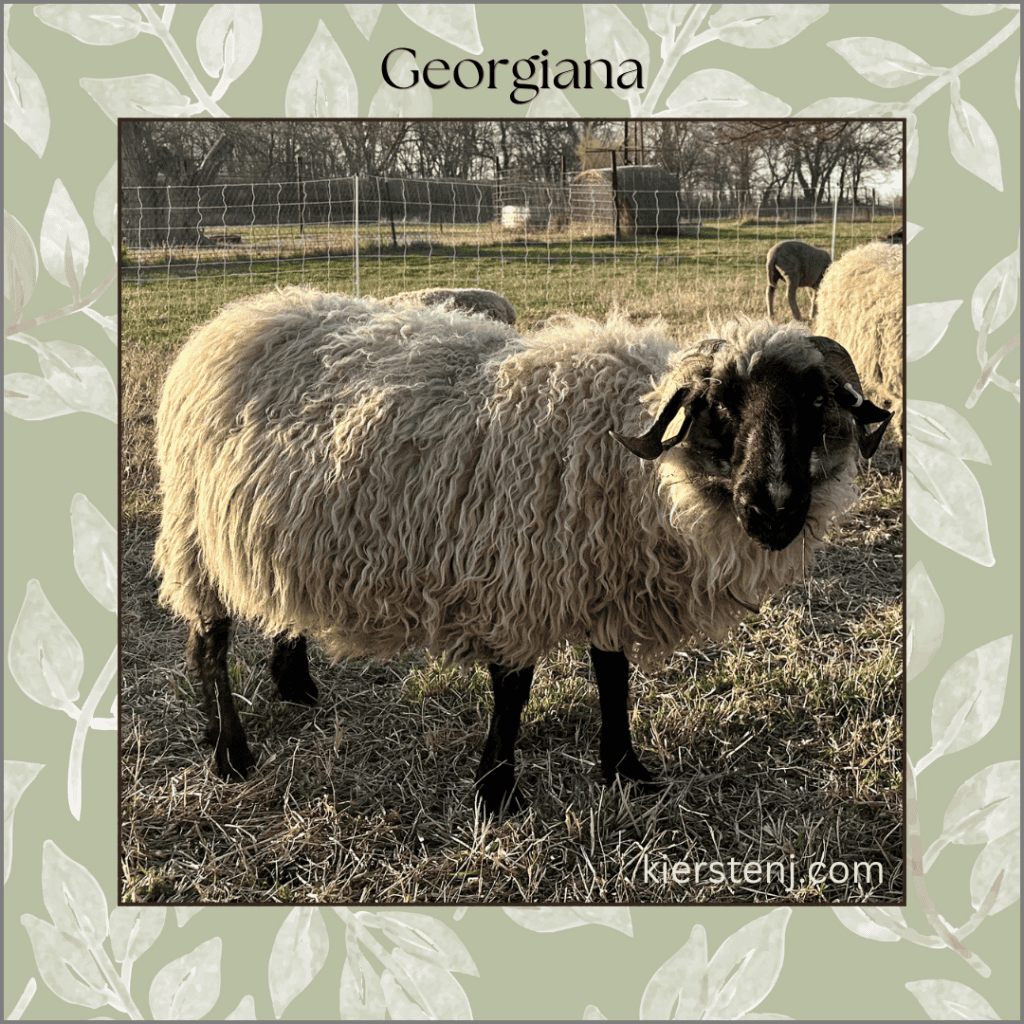
Look at all that wool.
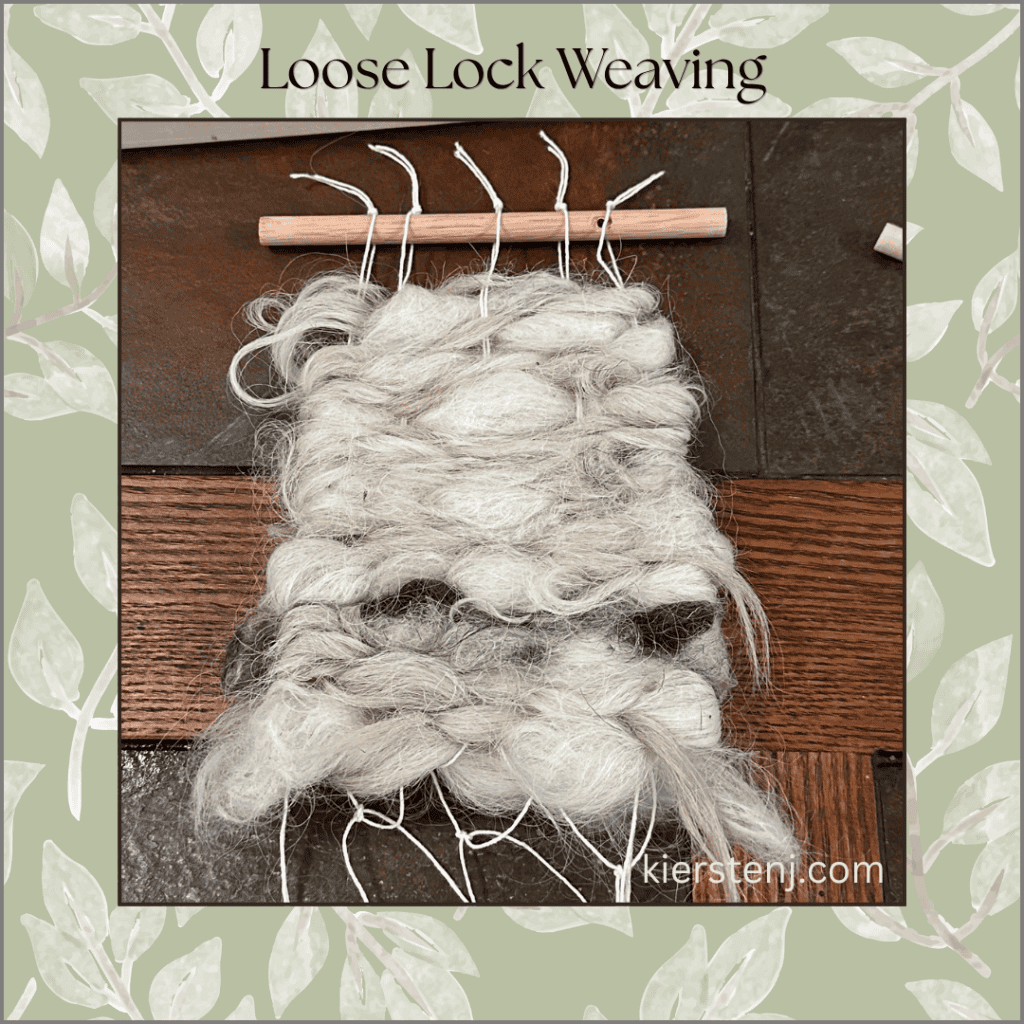
After a plain cold water soak, a hot water scouring, and air drying of some of Georgiana’s fleece, I grabbed my peg loom.
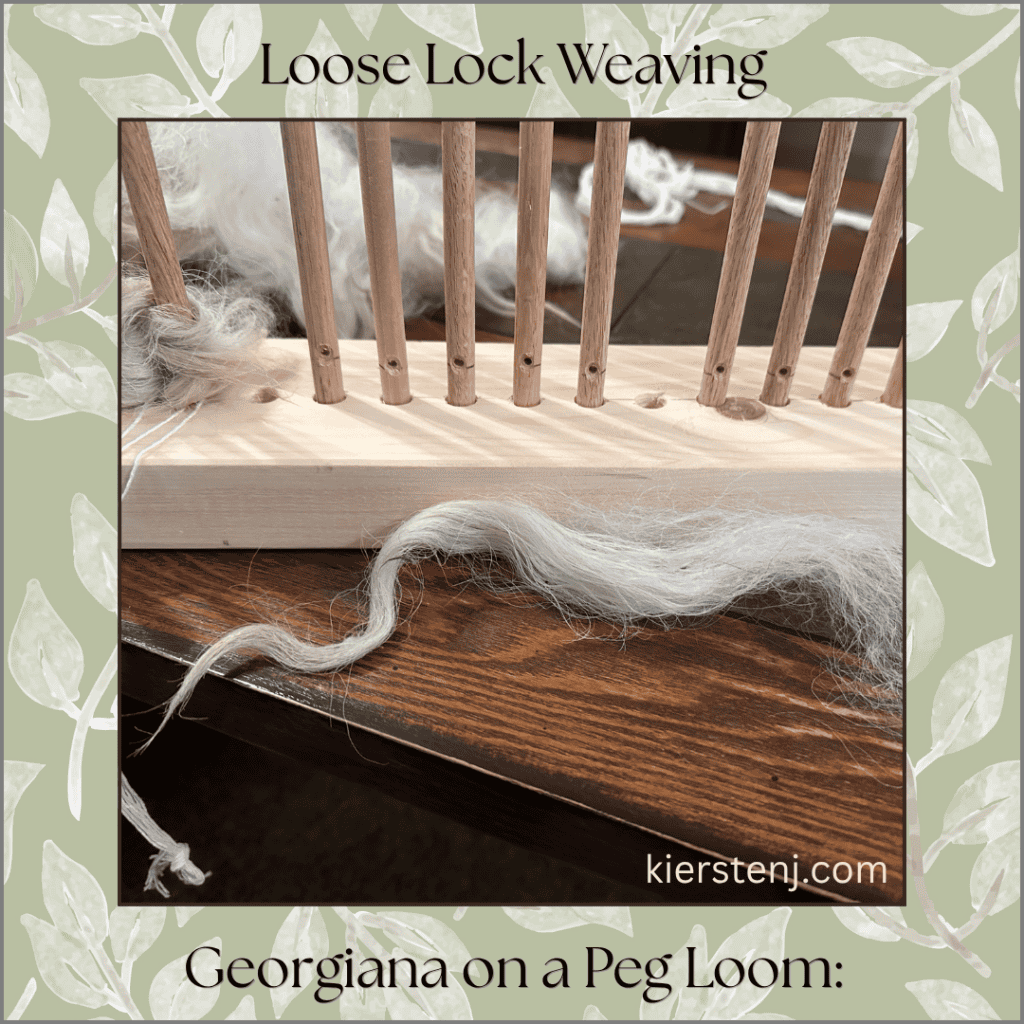
The photo above shows the lock as I grabbed it from the fleece. The lovely part of this is that someone can make something interesting from wool without having to spin it or make it more workable. It’s just Georgie’s wool, cleaned up a bit, but not much different than when she was wearing it.
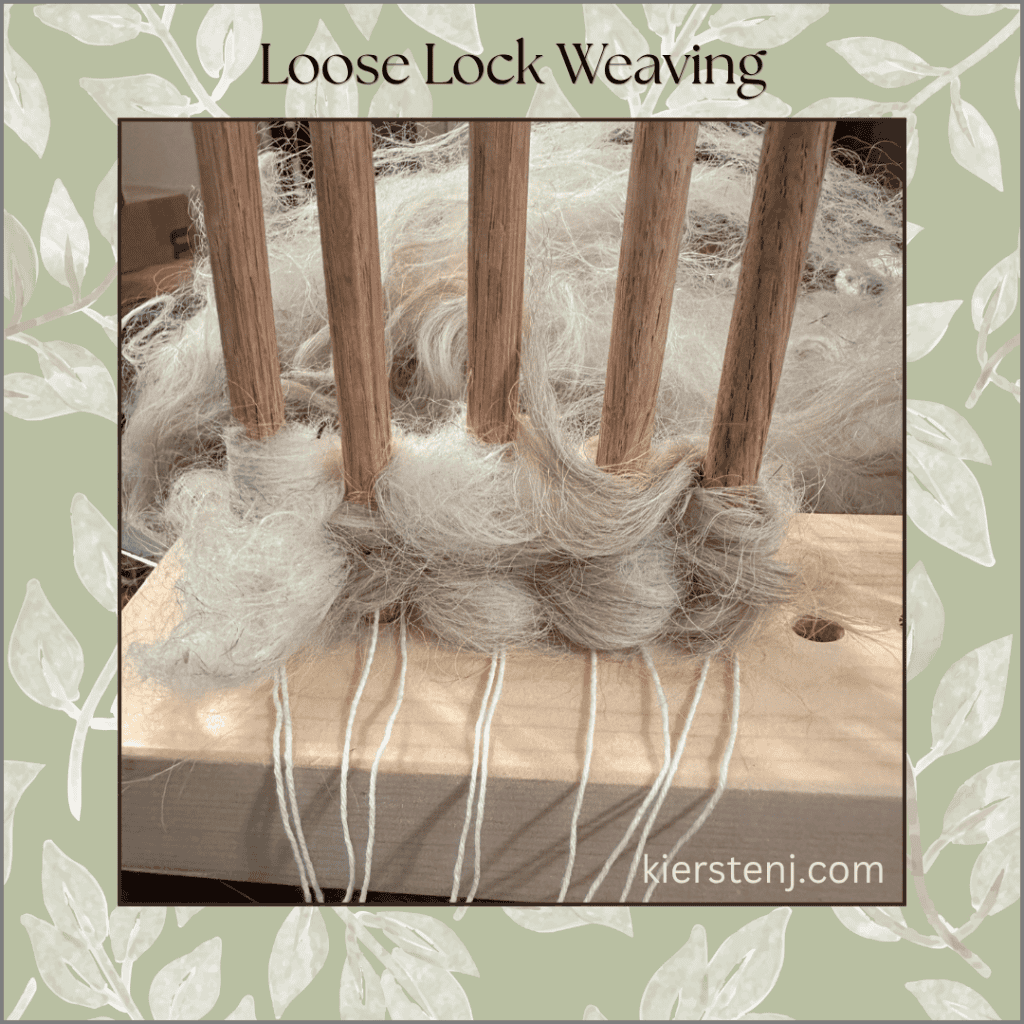
Weaving on a peg loom is very easy, and the grippy nature of this wool made it perfect to just overlap locks as I went along.
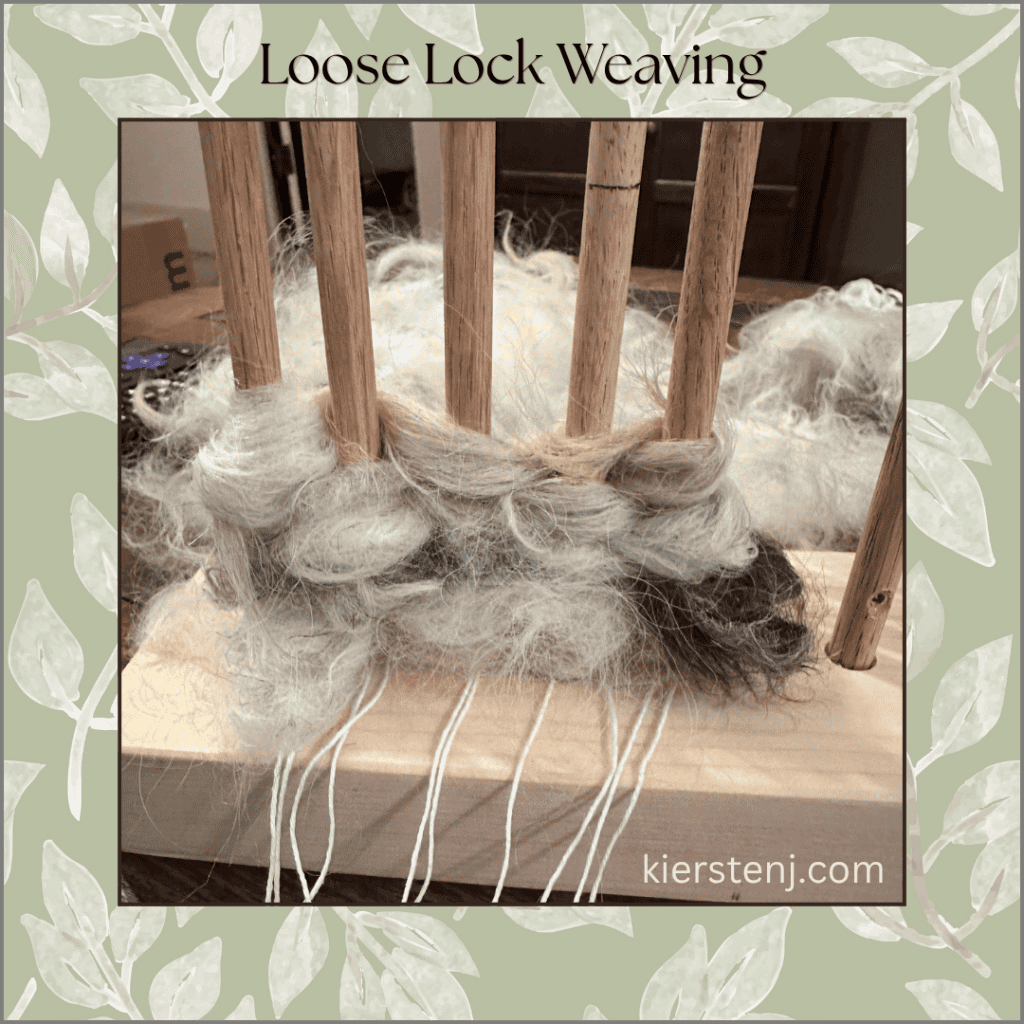
I loved watching the different colors of Georgiana’s fleece layer against each other.
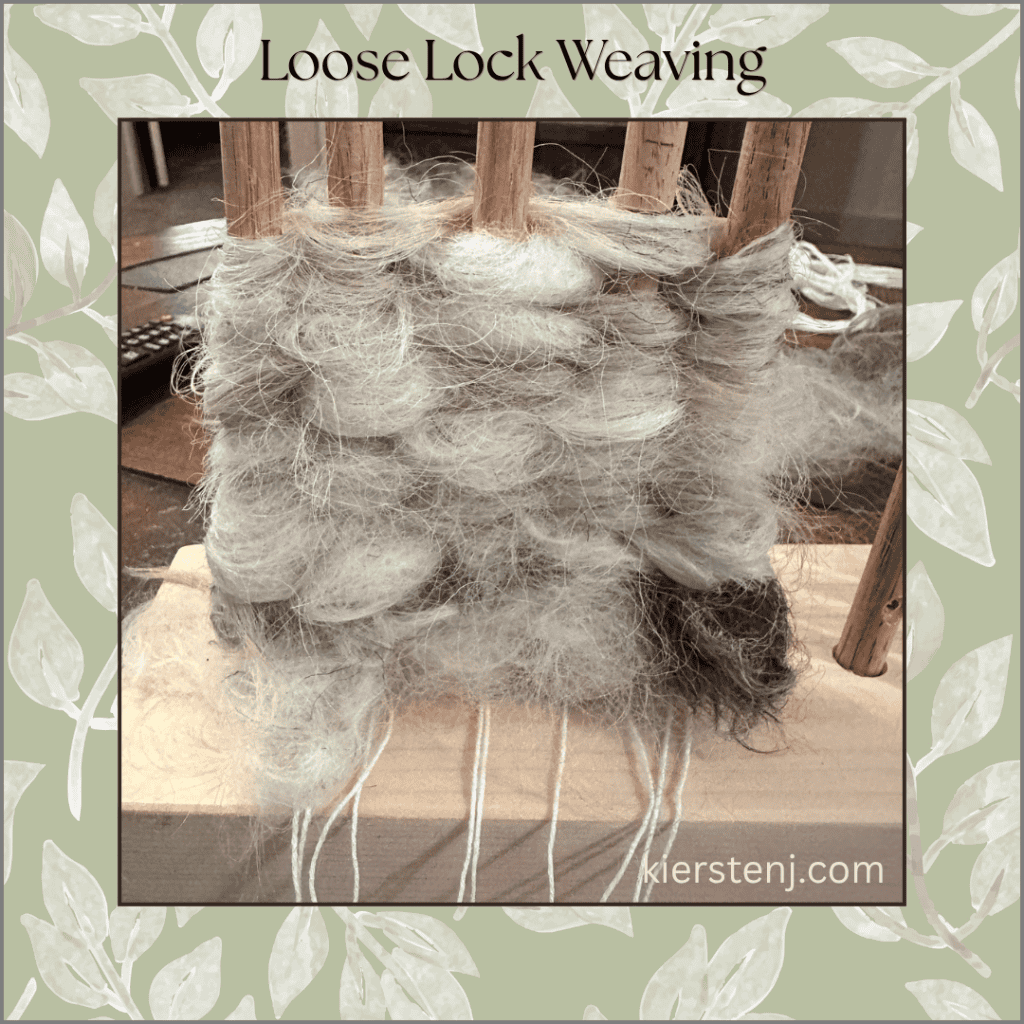
I intentionally let the locks be “messy” as I continued, thinking of people who might have less ability with fine motor skills. I think my favorite part of this project is that it resists any attempts toward perfection (the wool is going to fuzz) and actually rewards imperfections. Those imperfections are what make the piece so visually interesting.
The more Greg and I think about this project, the more we love it. Anything that helps people discover fiber arts, gives folks an opportunity to slow down and create without the pressure of perfectionism, or gives us a way to share Pemberley Farm with others feels like A Very Good Thing.
I’m excited about the idea of sharing these kits (peg loom, fleece, and instructions) at the convention this weekend and on our website in the future. It feels like such a great complement to Beast to Blanket, and a lovely way to use the wool our flock is producing and introduce others to fiber arts in a way that encourages the experience without demanding great skills.
By the way, we’re at the Texas Homeschool State Convention in Texas this weekend for Beast to Blanket, so if you happen to be there, please come by and say hello! I’ll be the short lady at the spinning wheel, and Greg will be nearby, making new friends with everyone who walks by.
Greg’s Got Questions
Thank you to those of you who participated in the last poll!
The winning question was: Of all the things you’ve learned since we started our Pemberley Woolworks business adventure, what have you been surprised that you’ve enjoyed learning? In other words, what’s something that you would have never expected to be interested in but now find fascinating to learn about?
This may be a bit of a cheat answer, but it’s the sheep. I think I knew I’d enjoy caring for them, but I had no idea how ignorant I was/am about what caring for them entails.
I had a pretty mental picture of all the wee flock in a pasture peacefully grazing together in a group and willingly coming near whenever I called. They’d subsist in soft focus on grass, water, sunshine, and affection, and we’d remove their fleece as needed in a simple process.
Ha.
Then we learned about hay, dogs, rams, minerals, hoof trimming, vaccinations, feed, breeding windows, lambing (volumes 1-3), colostrum replacement, banding, tetanus, selling, parasites, worming, pasture rotation, electric fencing, blue-kote, body condition scoring, etc.
And I still have oodles to learn.
But the more I learn about sheep, and about OUR sheep, the more I enjoy them and learning about them.
Greg’s Questions for Next Week
(As a matter of procedure, the poll function takes you to another page to submit your vote, so if that happens to you, you’re on the right track!)
These cover last week’s newsletter as well as this week’s:
Question 1: Based on your experience doing the loose lock weaving with the peg loom, what do you think the minimum recommended age will be for the kits?
Question 2: How did your own “pressure of perfectionism” show up when you first started weaving with Georgiana’s wool?
Question 3: What will the wool of the VBN lambs (Betsy, Eliza, and Fitzwilliam) be like compared to the adults?
Happy knitting,
Kiersten J