Live and in Person
One of my favorite aspects of the recent conventions has been the opportunity to introduce people to live spinning with a spinning wheel.
We didn’t do any sort of scientific polling, but the vast majority of the people who stopped and spoke with us had never seen a spinning wheel in person before. Most of those who had seen one previously had seen it as a museum artifact or an unused piece of furniture. I heard a few stories of mysterious family heirlooms that no one knew how to use but no one felt right about discarding.
A very few people told stories of grandmothers who used to spin and weave. One gentleman told of his grandmother who spun and wove outerwear that was sturdy enough to survive his own childhood and is currently being worn by his own child.
But in spite of the fact that I was using an unfamiliar tool and creating something not immediately recognizable by most of the crowd, the vast majority of the people who walked by our booths at least paused, if not stopped to watch for a while. Probably half of the traffic asked questions or stopped for at least a few minutes.
What causes this kind of reaction?
I only have a partial answer to that question: curiosity.
Spinning wheels are mesmerizing to watch. The motion is hypnotic, and if you have the opportunity to hear one working, the whirr is rhythmic and soothing. Some spinners’ movements are graceful and smooth, especially when chain plying, and can look like a seated dance. It’s hard to simply walk by that kind of display without pausing!
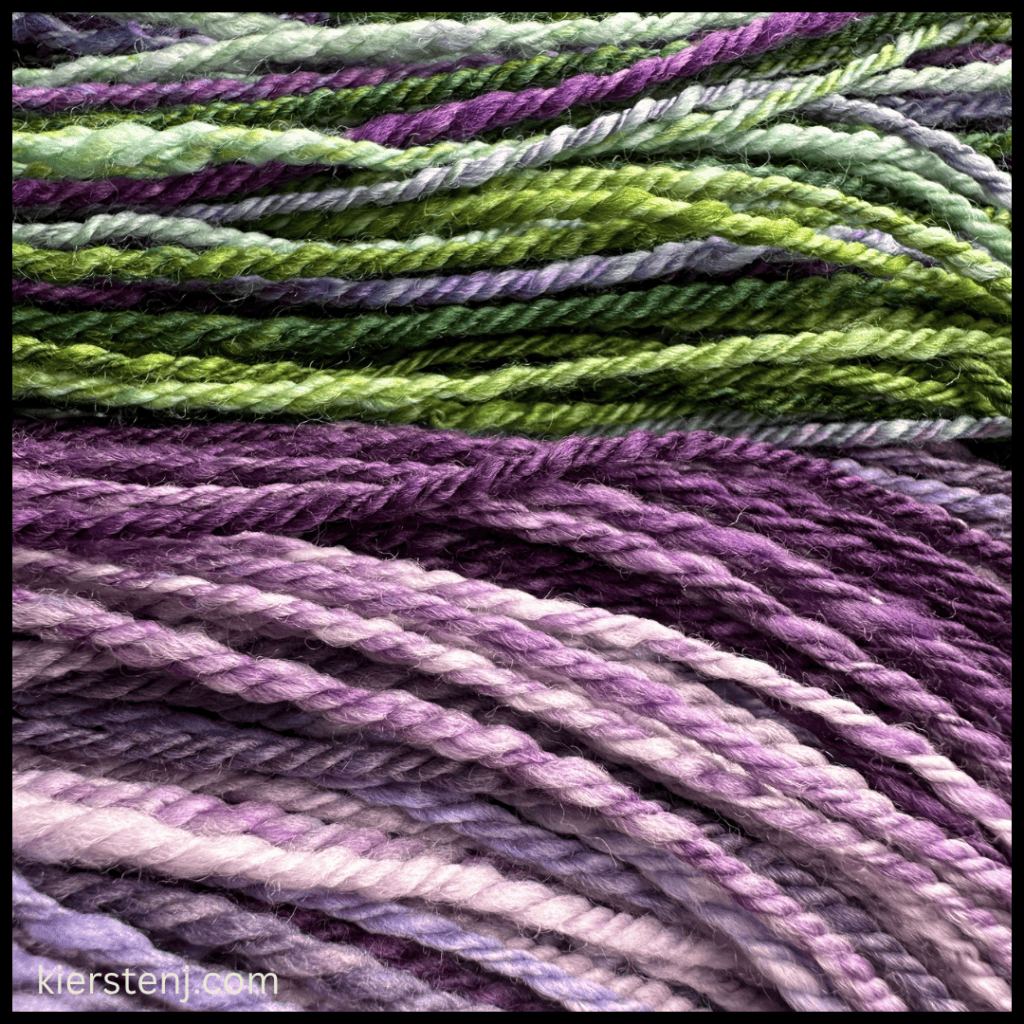
My limbs are too short to make any claims on gracefulness, but the action of the wheel and the colorful wool I was spinning was more than enough to capture attention.
And then the questions began:
- What are you doing?
- How does it work?
- Which way is the string going?
- Did you dye that?
- Who taught you to do that?
- Is it hard?
- Do you ever get tired?
- Is that wool from your sheep?
- Can I try it?
It was great.
I got to share this little piece of the story of wool with all sorts of people. Some were interested in Beast to Blanket and some absolutely weren’t, and both were completely fine. It was rewarding to me to provide a few moments of a unique and lovely experience for busy people and families.
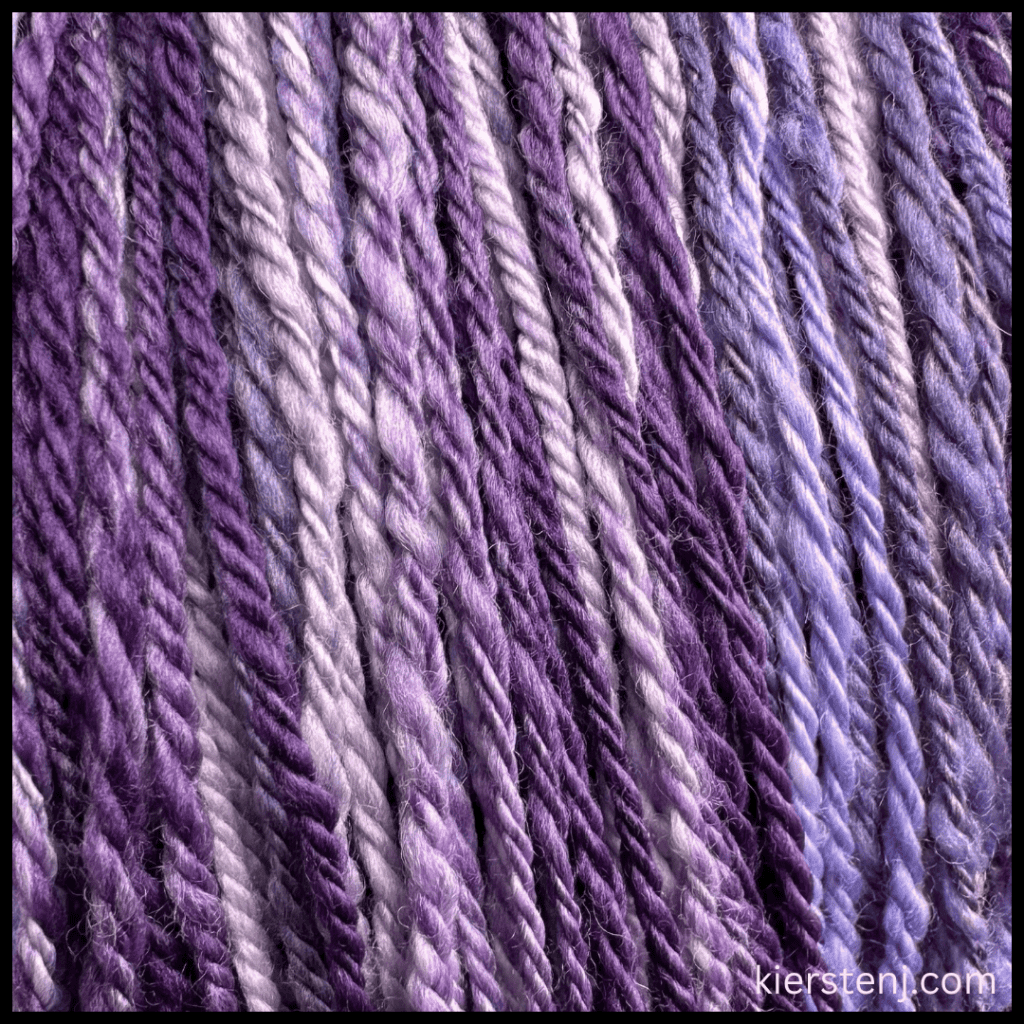
It also gave me the opportunity to get in some serious spinning time! Between the two conventions and a few finishing-up hours at home, I’ve completed five skeins, representing about 4,000 yards of spinning.
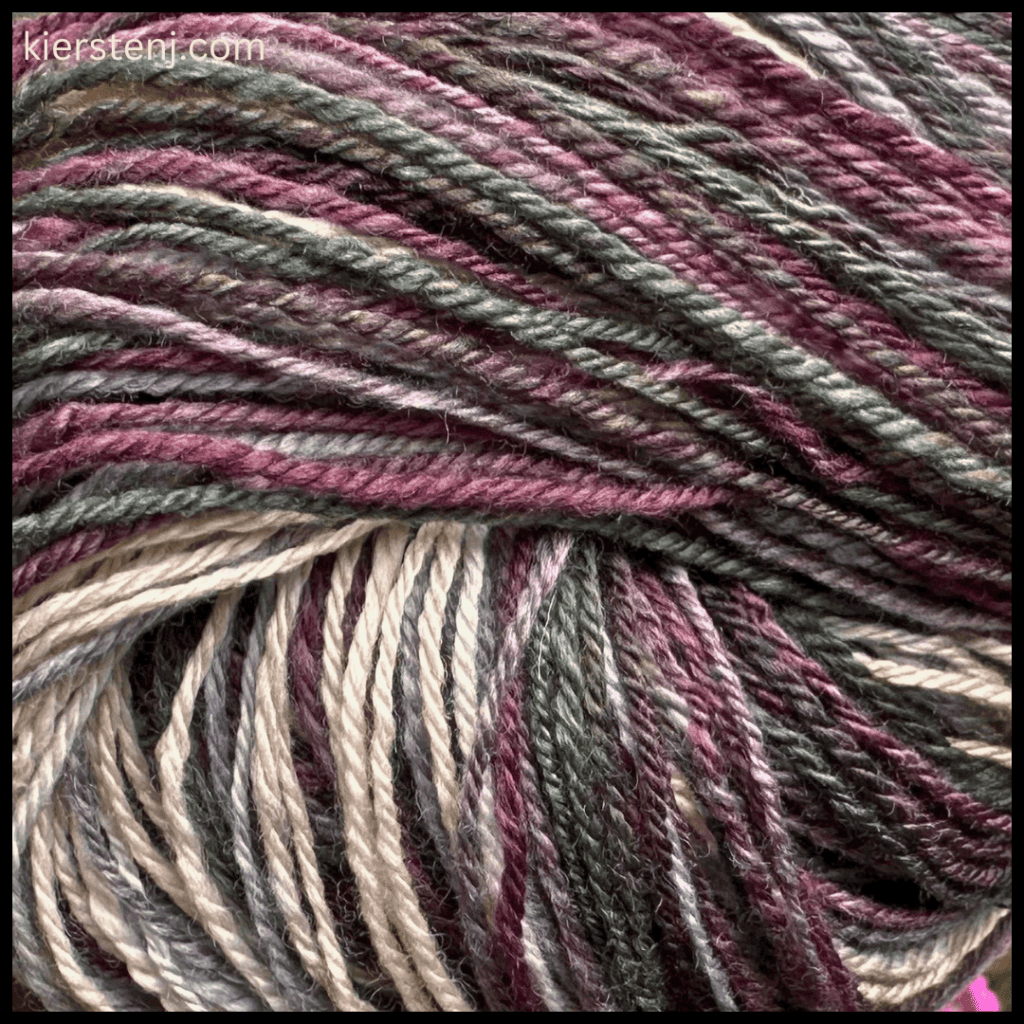
And about that question about whether it was wool from our own flock and whether or not I dyed it?
No. None of it was from our sheep, though it is all merino wool, from sheep like Mr. Knightley, Emma, Harriet, and Lizzy. And the bulk of it was dyed by the very talented Ginny from FatCatKnits, who I cannot recommend highly enough as a source for beautifully dyed spinning fiber.
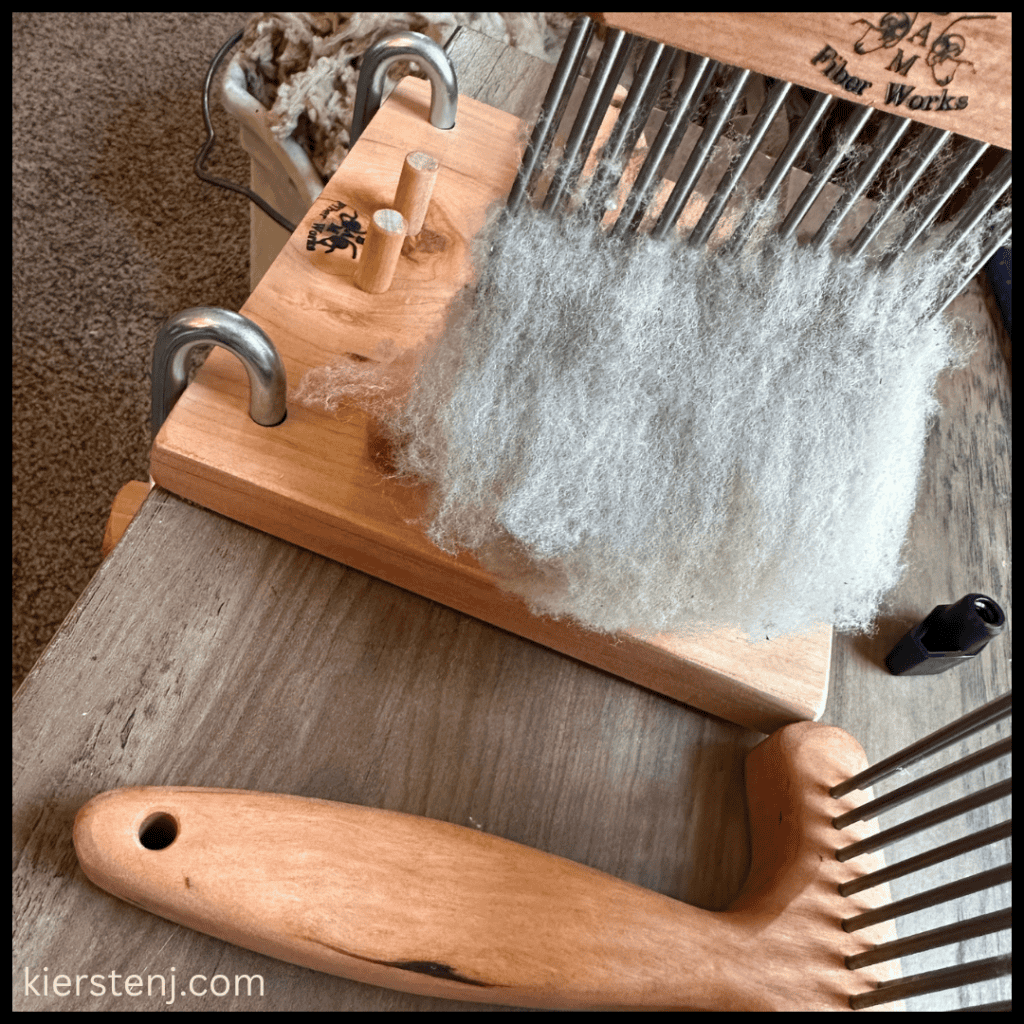
I started the process of cleaning and combing Mr. Knightley’s fleece, and I am learning a lot:
- It is incredibly satisfying to personally complete the whole wool processing arc from lambing to finished knitted object by having learned how to clean, scour, and comb wool.
- It is hard to overestimate the amount of lanolin in Mr. Knightley’s wool and how tricky it is to get it out.
- There is a lot of waste involved in combing wool. Part of this may be because Mr. Knightley’s wool wasn’t at the perfect length when it was sheared, and part of it may be because I’m not far enough on the learning curve with #2, but there is a lot less roving at the end of the process than there is fiber going in.
- I’m learning that carding may be another part of the process I need to pick up to deal with #3.
- I have a lot more to learn about every step of this.
- I completely understand those who say “NOPE. I’ll pick the two-year waiting list at a fiber mill, please!” as well as those who are fascinated by this process and can’t imagine outsourcing it to anyone else.
For now, my most recently spun skein is drying in the Kansas wind and I need to turn my attention to the other end of the production spectrum and spend some time on some commission work.
At the same time, we’re keeping a close eye on Babydoll ewe Margaret, who is playing the best “Am I or Am I Not Pregnant?” game I’ve seen since Jane and Fitz. She’s running out of calendar for her possible lambing window, so we’ll have our answer within another week or so.
It’s a show I can’t stop watching!
Greg’s Got Questions
Thank you to those of you who participated in the last poll!
The winning question was: What will the wool of the VBN lambs (Betsy, Eliza, and Fitzwilliam) be like compared to the adults?
It’s so much softer.
This first shearing of their wool is the softest it will ever be.
I was very curious about how the lambs’ wool would feel as it grew back from this first shearing, and we’re already able to tell a difference in the texture in the new growth. It’s thicker and coarser, and seems more dense as well, although I’m not sure if that’s reality or perception.
Thankfully, Fitzie still has his sweet ringlet curls.
Greg’s Questions for Next Week
(As a matter of procedure, the poll function takes you to another page to submit your vote, so if that happens to you, you’re on the right track!)
Question 1: Do you realize that 4,000 yards is 2.27 miles? You spun over two miles of yarn, Kiersten! And, I know I asked you’ve this before, but given your demonstrated production capacity, it’s worth asking again. Are you SURE you can’t spin straw into gold? I think I read a how-to book on that when I was a kid. Maybe it was written by Jane Austen???
Question 2: From the list of those asked at the conventions, “Who did teach you how to spin?”
Question 3: I know you’re still learning, but based on your experience so far with the whole wool processing arc, what are enjoying the most and the least?
Happy knitting,
Kiersten J