New Neighbors
It’s happened again.
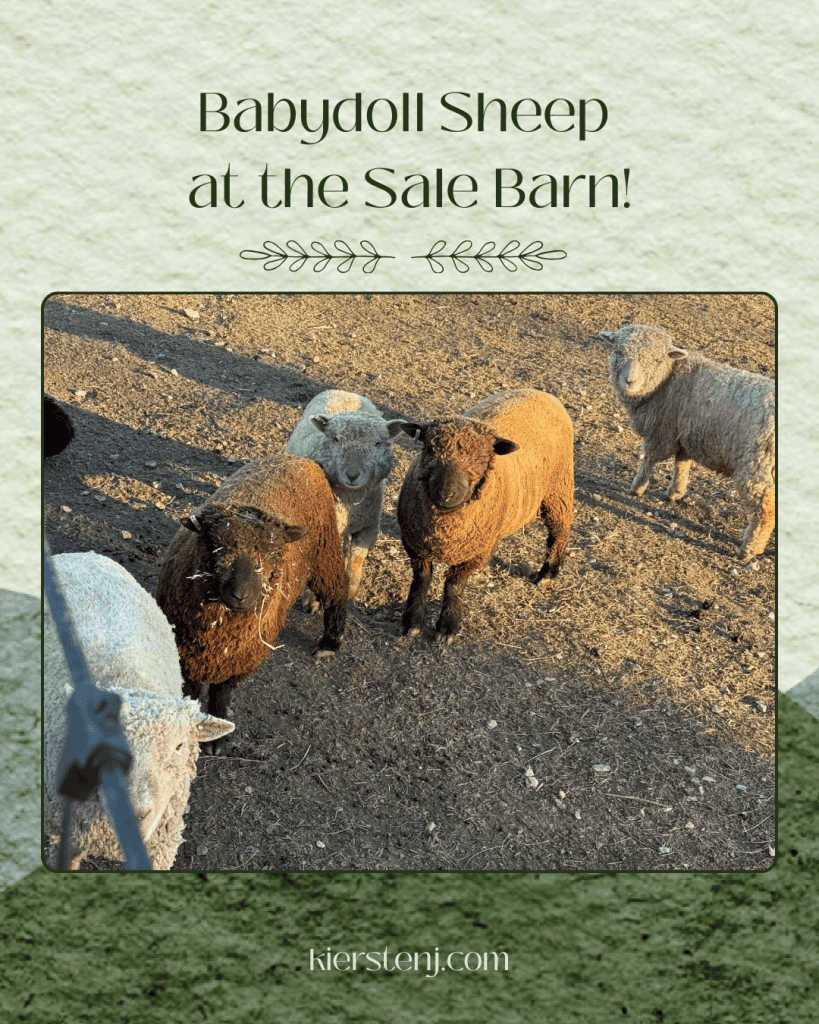
It started with a picture and a text from my daughter in law: “There are going to be babydolls at the sale tomorrow (heart emoji) 2 of these are ewes but not sure which.”
My reply: “Oh no.”
Then: “Look at those faces.”
Her enabling answer: “Right? Ad says they’re feed-from-hand friendly.”
She’s a complete menace.
Also, the kindest person ever, because the dear woman junked her original plans for the day and gave up the best part of it to help try and bring home some livestock for extended family members.
Seriously, she’s a gem.
The next morning, Emma, Lizzy and Harriet woke up to some new friends in their vicinity:
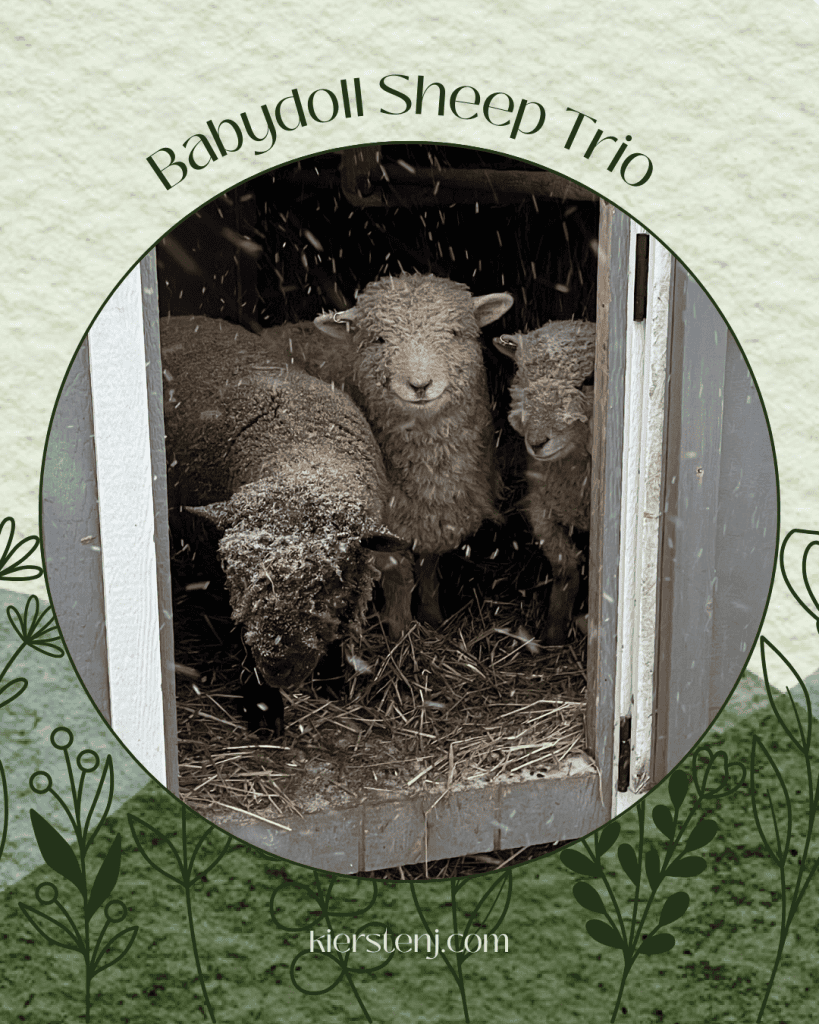
These three lovelies spent a few days playing with Harriet in the chicken coop while Harriet’s mom Emma kept a watchful eye and despaired over the state of her floors.
However, Greg and I were eager to bring our pair of Babydoll sheep down as soon as possible! As soon as possible turned out to be this week, in a whirlwind trip including playtime with grandkids, the best chili I’ve ever had (have you tried chili with bits of beef brisket in it?), a speed-build of an animal transport crate worthy of a “what can you build from garage scraps in 2 hours” sort of reality TV show, and back-to-back days on the road.
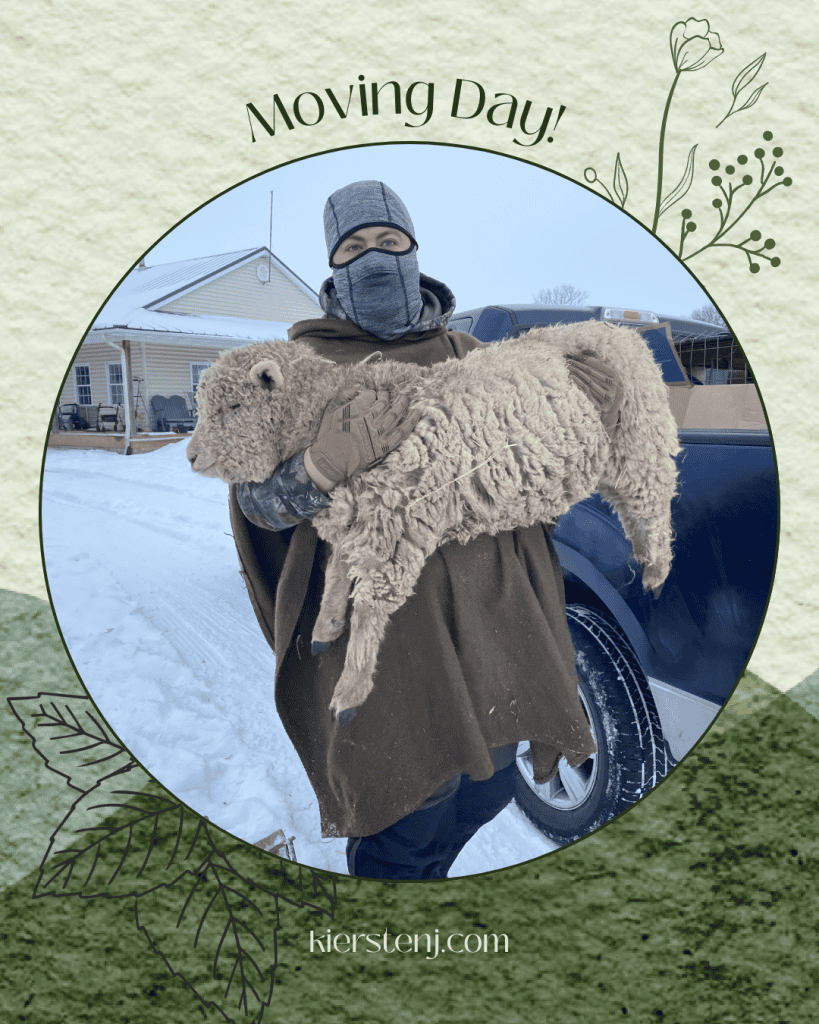
My son and daughter in law helped us get Jane (above) and Mr. Bingley (short, dark, and handsome) loaded up for the long drive to the new estate.

Seriously, look at those faces.
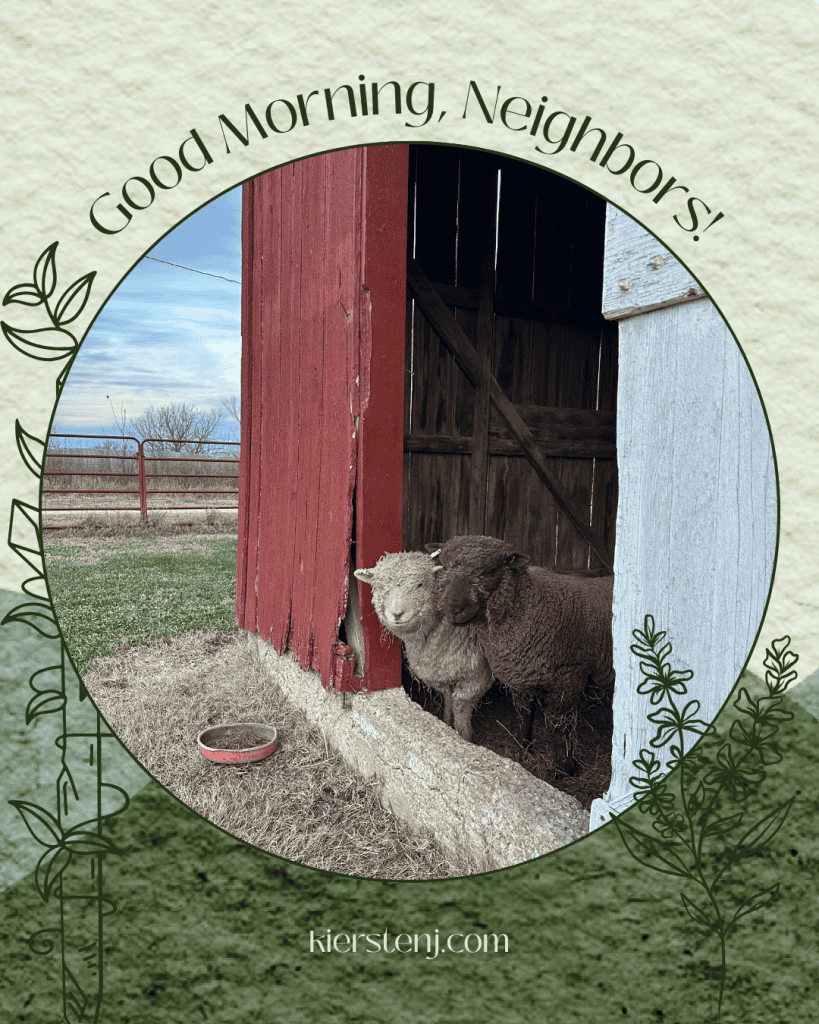
I think Greg and I were far more stressed about the trip than the hay munchers in the back.
It didn’t take long for them to find their way into the barn when we arrived late at night, and the next morning it only took them a few seconds to gather their courage to go exploring.
While I did learn, during my research into the breed, that Babydoll sheep are excellent lawnmowers, I did not realize that they also specialize in weedeating services. I should have. They literally eat weeds. But Jane and Mr. Bingley seemed to zero in first on the longest grasses right up against the barn.
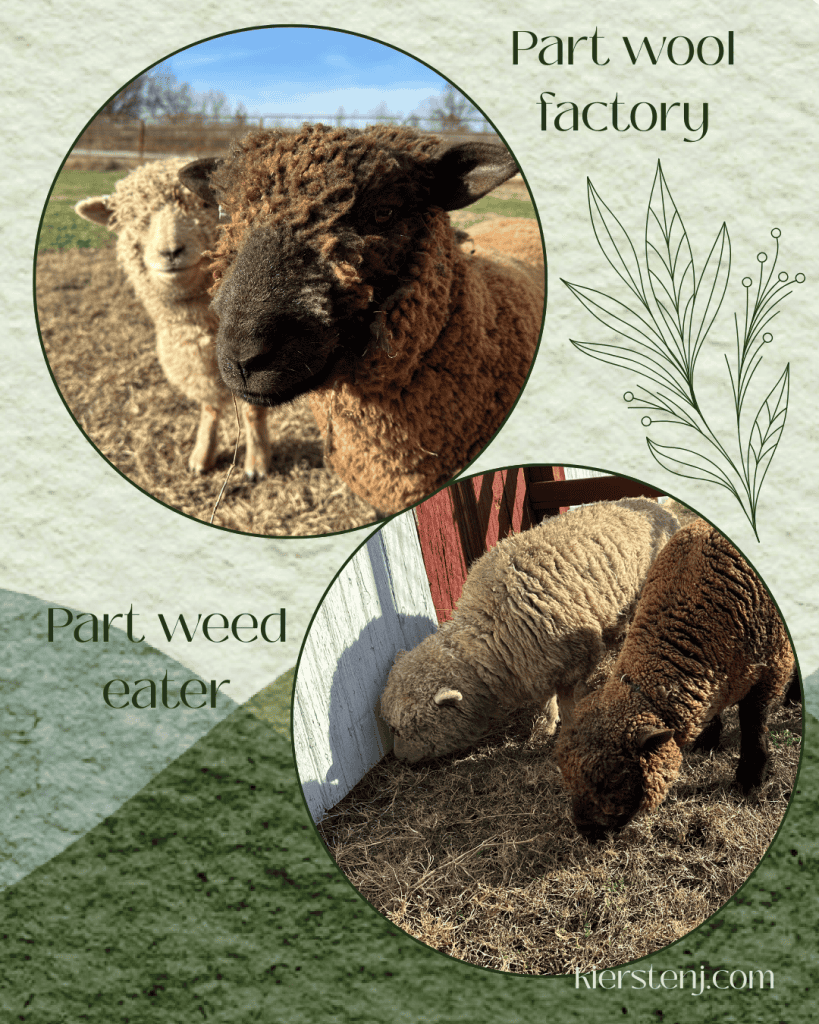
What an excellent side benefit to having these lovely creatures around. They’ll have the place tidied up in no time.

I am SO enjoying watching these two explore their new home. They’re still a bit cautious and tend to hover near the entrance to the barn and near the gate where we come in, with only brief excursions out into the bigger spaces or around the back of the barn.
And the barn cats have them completely cowed.
The first time the sheep came out of the barn and a small barn cat wandered into the enclosure, the poor things bolted as fast and as far as they could. Their fuzzy bums were smooshed against the fence, and they watched that kitty watch them without anybody moving a muscle. It was the weirdest stare down I’ve seen in quite a while. Each party regarded the other like they were highly trained lethal warriors locked in mortal combat, ready to explode into furious and deadly action at any moment. From my perspective, it looked like a handful of miniature fuzzballs you might cuddle up with for a good nap. Weird.
Despite the barn cat phobia, the Bingleys and I are getting along swimmingly.
I’m working on being a calm and recognizable presence that occasionally hands out corn treats. I hear that helps humans do well in sheep polls. I’ll let you know.
Greg’s Got Questions:
Thank you to those of you who participated in the poll last week!
LAST WEEK’S QUESTION:
What are you most excited about in using the sweater pattern you picked out for me? Is there anything especially challenging with this project?
As a reminder, the sweater under discussion is the Auster Pullover by Michele Wang. (Ravelry link.) It’s a classic-looking sweater with a striking repeated cable pattern on the front and back and simply knit sleeves.
Aside from the joy of making something really cool for Greg, I’m excited about the construction of this sweater, because it’s so different from all the sweaters I’ve been making lately.
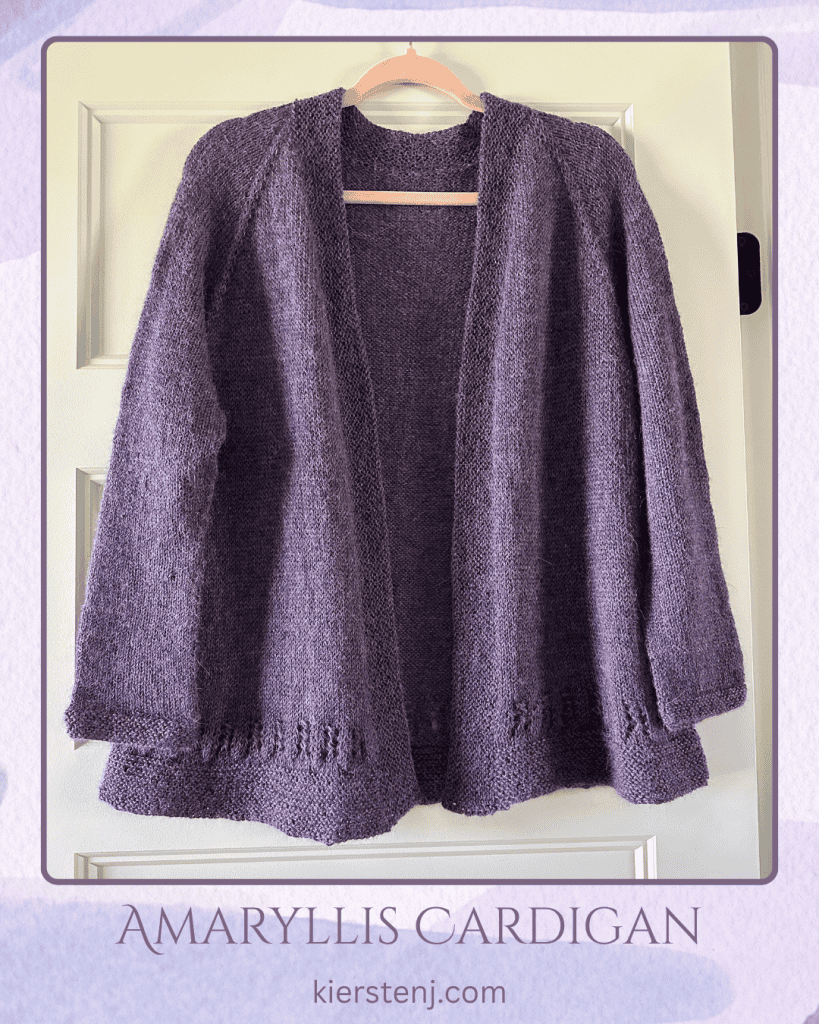
Most of my recent sweaters have been made using what’s called raglan construction. I cast on stitches for the neck, and then add stitches gradually at the front and back of where the sleeves will be until the sleeves are as wide as they’re going to be. Then I put the sleeve stitches on hold and continue knitting down the body of the sweater, casting on a few stitches for the bottom of the armhole, but basically leaving two unfinished sleeves to pick up and finish after the entire body of the sweater has been completed.
You can see the lines for the increases at the fronts of the shoulders in the picture of the finished cardigan below:
For Greg’s sweater, the front, back, and sleeves are all knit separately and then seamed together. Then the collar is picked up from the sewn garment and knit last. I haven’t made a sweater like that in a very, very long time.
In fact, the last time I was even involved with a sweater like that was when I taught a private class to a woman who wanted to learn the processes involved in properly finishing a handknit garment. It was incredibly satisfying for both of us to take all the unwieldy pieces of her sweater, block them, seam them, attach the fasteners, and finally behold a beautifully constructed heirloom-quality piece of clothing.
I’m looking forward to that process again.
Greg’s Questions for This Week:
Here are the questions up for the vote this week. I’ll answer the winner in the next newsletter. (As a matter of procedure, the poll function takes you to another page to submit your vote, so if that happens to you, you’re on the right track!)
Question 1: First and foremost, why did MY chili suddenly plummet in your chili cook off ratings?!!! Yeah, that chili was awesome, but we were REALLY hungry after driving all day and the kids and grandkids were there. That must have unfairly influenced your voting. If you’re eating my chili with the adobo chile in those circumstances, I think I have a chance. Oh yeah, and with brisket or I’m definitely a distant second.
Question 2: What will we do with the wool from the newly acquired, incredibly cute Bingley couple? They do provide more value to our business than simply being adorable, don’t they? And how much wool should we expect from these tiny little micro wool factories?
Question 3: We readers who aren’t so fluent in Austenese are curious. “Jane” and “Mr. Bingley” – where did these names come from and why did you pick them?
Happy knitting,
Kiersten J